

As part of our comprehensive ‘Identifying Diseases’ series, this article focuses on another leaf spot disease that targets a majority of native tree species within Australia. Mycosphaerella marksii (Marksii leaf spot) is a fungal disease that generally attacks a variety of unique eucalypti tree species found throughout Australia, especially in Queensland and other sub-tropical environments, but has also been documented and found across the entire country in smaller numbers.
Affected Trees:
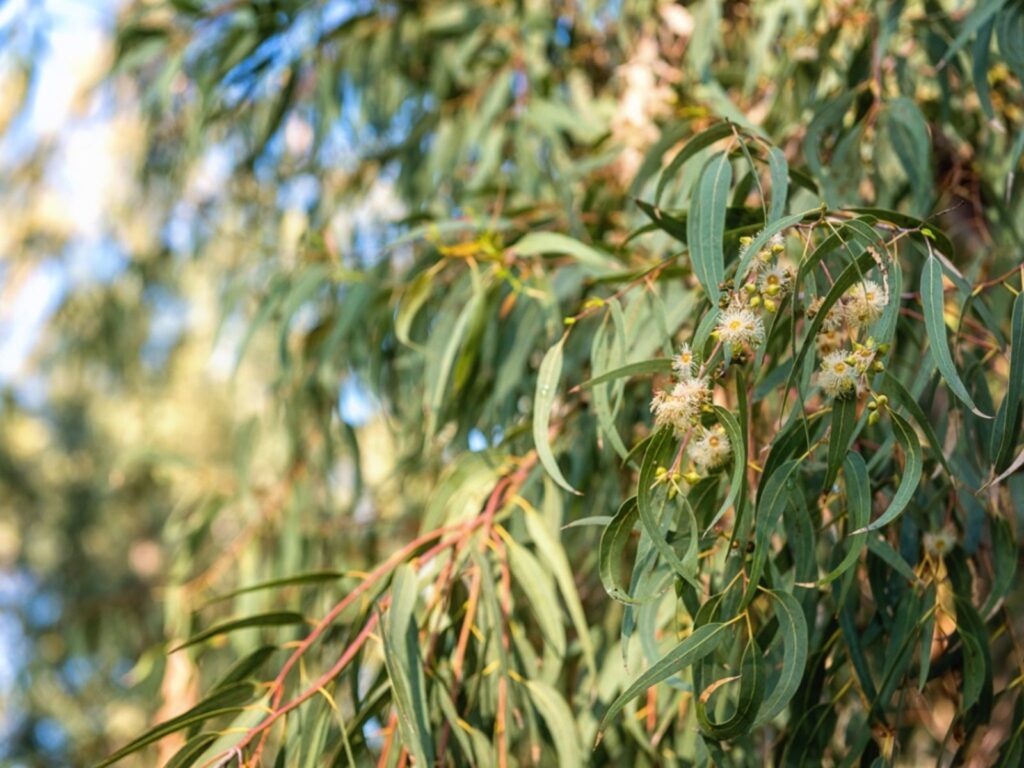
Primarily targeting the E. pilularis (Blackbutt) eucalyptus tree species across south-east Australia, M. marksii is also known to target other native eucalypti species such as:
- E. saligna (Sydney blue gum)
- E. dunnii (Dunn’s white gum)
- E. grandis (Rose gum)
- E. globulus (Southern blue gum)
- E. pellita (Large-fruited red mahogany)
- Syncarpia glomulifera (Turpentine)
- Spotted gum hybrid
It can most often be found along the entire eastern coast of Australia, stretching from Cairns to Victoria and even in some places in Western Australia.
Symptoms:
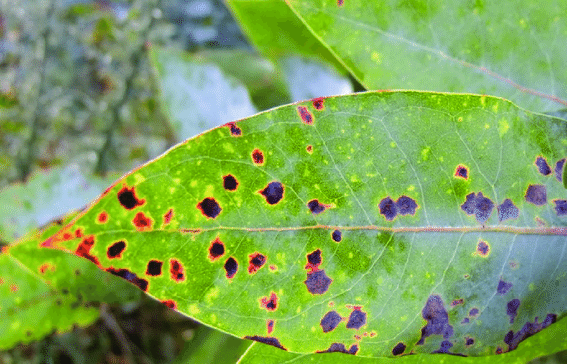
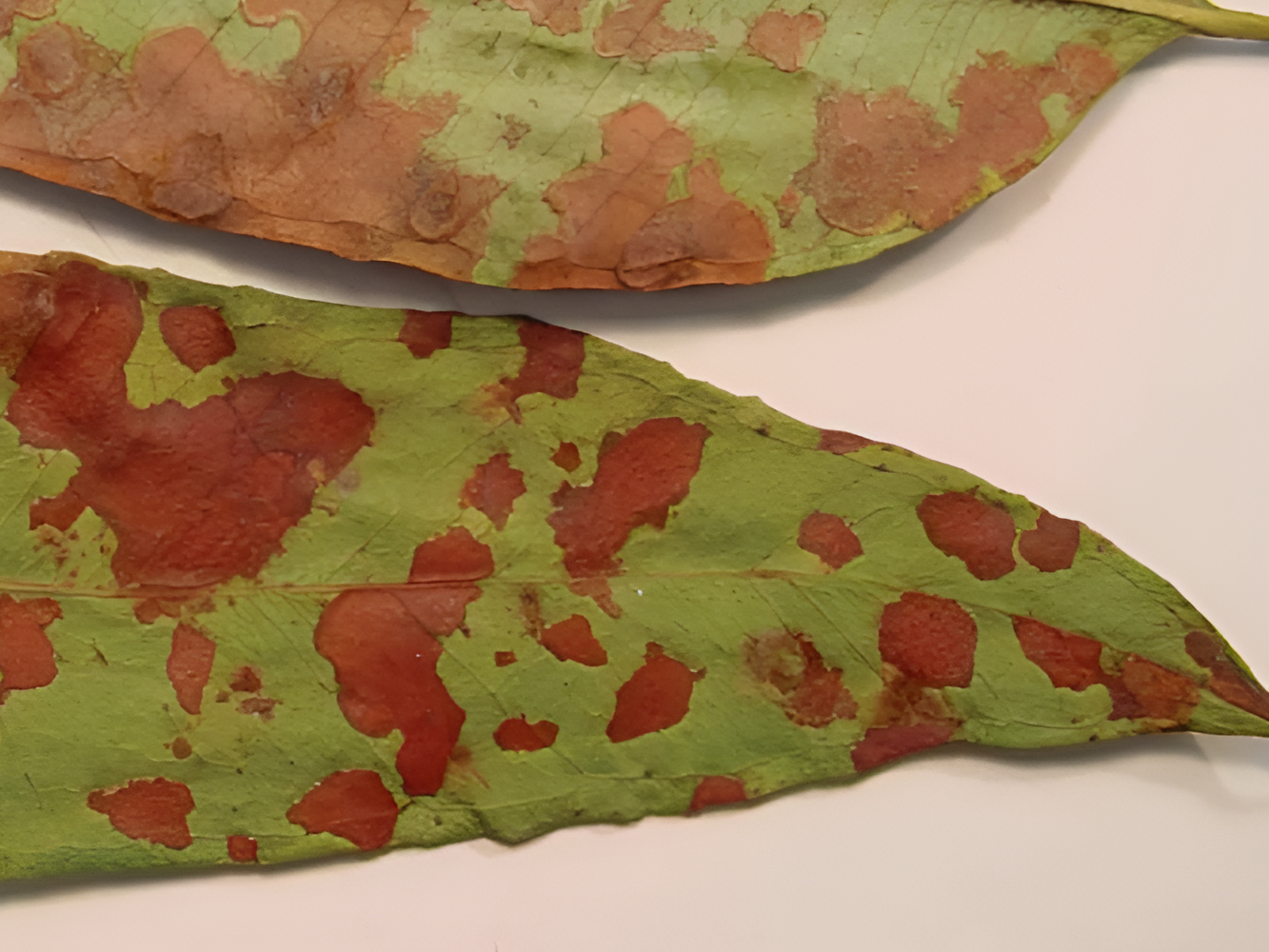
M. marksii (Marksii leaf spot) outbreaks will nominally appear as circular or irregular shaped spots that expand from 3-20mm in width and take on a yellow or red-brown colour when on the upper leaf surface (sky orientated) and a grey tone on the lower surface (ground orientated). However, this can vary depending on the particular species of eucalypt that is infected.
E. pilularis (Blackbutt) eucalypts infected by M. marksii often show reddish-brown lesions with irregular circle patterns that clump together and coalesce. Meanwhile, other species like E. saligna (Sydney blue gum), E. dunnii (Dunn’s white gum) and E. grandis (Rose gum) infected with M. marksii manifest yellowish-brown coloured spots that have reddish-brown borders and take on a mostly circular appearance of about 12mm in size.
In any case, the disease tends to usually form around the margin or edges of a leaf where they usually combine together to form larger spots. M. marksii generally targets the older leaves in a tree first, especially those in the lower canopy where there is more shade from the sun. As a result, the leaves infected by this fungi are prone to pre-mature dropping which causes a noticeable decline in the fullness of the lower canopy.
Causes:
The fruiting bodies of M. marksii are usually found on the lower leaf surface away from the sun but can sometimes, albeit rarely, form on the upper surface of the infected leaf as well. These fruiting bodies will normally only release spores when humidity is both extremely high (>85%) and the leaf is sufficiently wet.
M. marksii spores are usually carried off by rain to infect fresh leaf tissue nearby or uninfected leaves. Infected tissue can also transmit the disease after being shed prematurely as, much like the Aulographina eucalypti (Target leaf spot) fungi, the lightly infected tissue and lesions caused by M. marksii are capable of surviving for extremely long amounts of time off structure and thus serve as viable paths of transmission for the fungi to spread further.
Management & Treatment:
While M. marksii is a very real and serious problem for eucalypt tree plantations overseas, it is not a major threat nor concern in Australia and is generally left alone when isolated outbreaks occur. While the disease does cause mild reductions in the fullness of the affected trees canopy, well established trees are normally more then capable of recovering once the disease passes without intervention.
While intervention isn’t usually necessary once infected, preventative measures can be taken to reduce the likelihood of the disease occurring in the first place, as well as returning in the future. Leaf droppings should be cleared out of the garden and disposed of in a waste bin, regardless of whether a disease is present, as layers of decaying leaves provide ideal breeding grounds for other fungi as well.
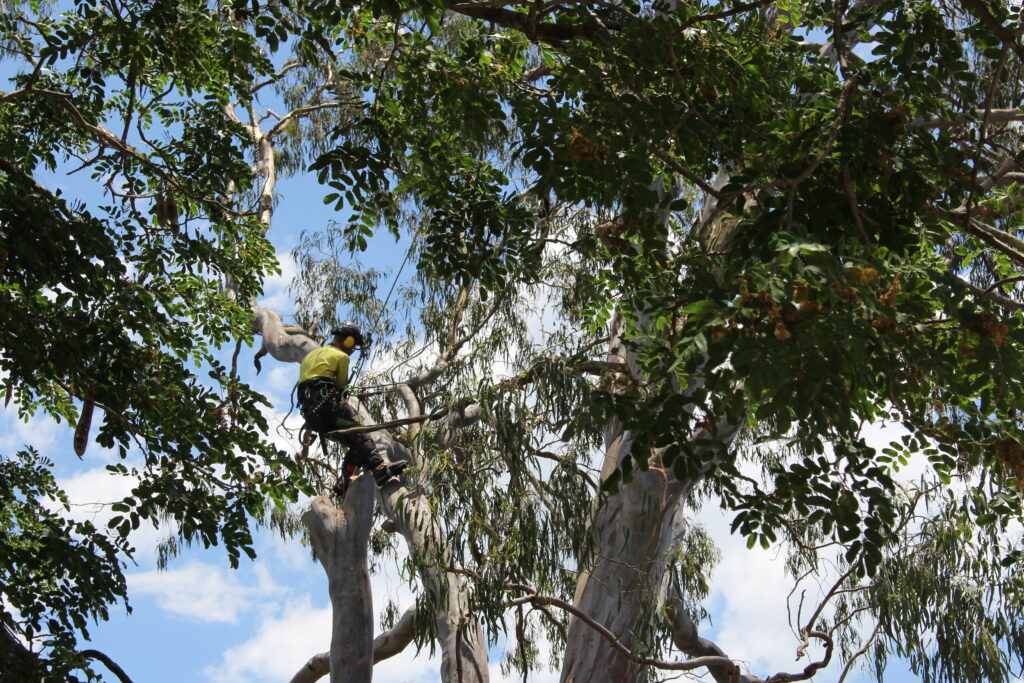
If you believe you might need help with managing your trees on your property, contact us here or call us on 1800 353 053.
Further Resources & Research:
Leaf spot diseases. (2024, March 8). Queensland Government. Retrieved July 15, 2025, from https://www.business.qld.gov.au/industries/farms-fishing-forestry/forests-wood/pests-diseases/trees-timber/leaf-spot-disease
Carnegie, AJ, Lawson, SA, Smith, TE, Pegg, GS, Stone, C, McDonald, JM, 2008, Healthy hardwoods: a field guide to pests, diseases and nutritional disorders in subtropical hardwoods, Forest & Wood Products Australia, Victoria.
Van Niekerk, J.M. et al. (2004) ‘Systematic reappraisal of Coniella and Pilidiella, with specific reference to species occurring on Eucalyptus and Vitis in South Africa’, Mycological Research, 108(3), pp. 283–303. doi:10.1017/S0953756204009268.