
Why Do We Perform Tree Risk Assessments?
Tree Risk Assessments are conducted to determine the risks posed by weakened or sick trees and whether they pose a threat to either people or property if they were to experience structural failure. The primary goal is to generally establish the overall state the tree is in, their health and stability. These assessments are undertaken by qualified arborists who will corroborate and share their findings with property owners and local councils so that preventative measures can be taken if need be.
Why Tree Risk Assessments are important!
Safety is one of the most important reasons for conducting a risk assessment on a set of or individual trees. Unexpected failures of the structure of the tree or it’s limbs could cause serious injury or damage to property. However, there are many other reasons why getting a risk assessment can be beneficial.
For example, risk assessments can help preserve valuable or rare trees and plants that hold ecological, historical or aesthetic value to the environment or community around it. Furthermore, regular check ups for risk assessments can more often than not be far cheaper then having to make costly repairs to damaged property when they fail.
Types of Risk Assessments
Visual Assessments.
The most common type of assessment, visual risk assessments involve a trained arborist visually inspecting the structure of the tree, taking note of the colour and look of the tree’s trunk, above ground roots, bark, limbs, branches and canopy. An arborist will also look for any signs of disease or infestations such as borers or plant lice, alongside potential fungal infections.
Advanced Risk Assessment.
This type of risk assessment, unlike visual assessments, involves a more in-depth assessment of the tree, which may include using internal testing instruments like an Arborist’s Mallet to tap the tree or a Sonic Tomograph to detect any cavities or signs of decay inside the tree.
Quantitative Risk Assessment.
A more data driven approach to risk assessment, this form of risk assessment uses mathematical models and algorithms to assess the risk a tree poses to the area around it. It involves assigning values to different factors (eg. Tree size, condition, location, etc.) and using them to calculate the likelihood of failure as well as the potential consequences of said failure. This form of assessment is most often used in large scale tree management programs rather than individual cases.
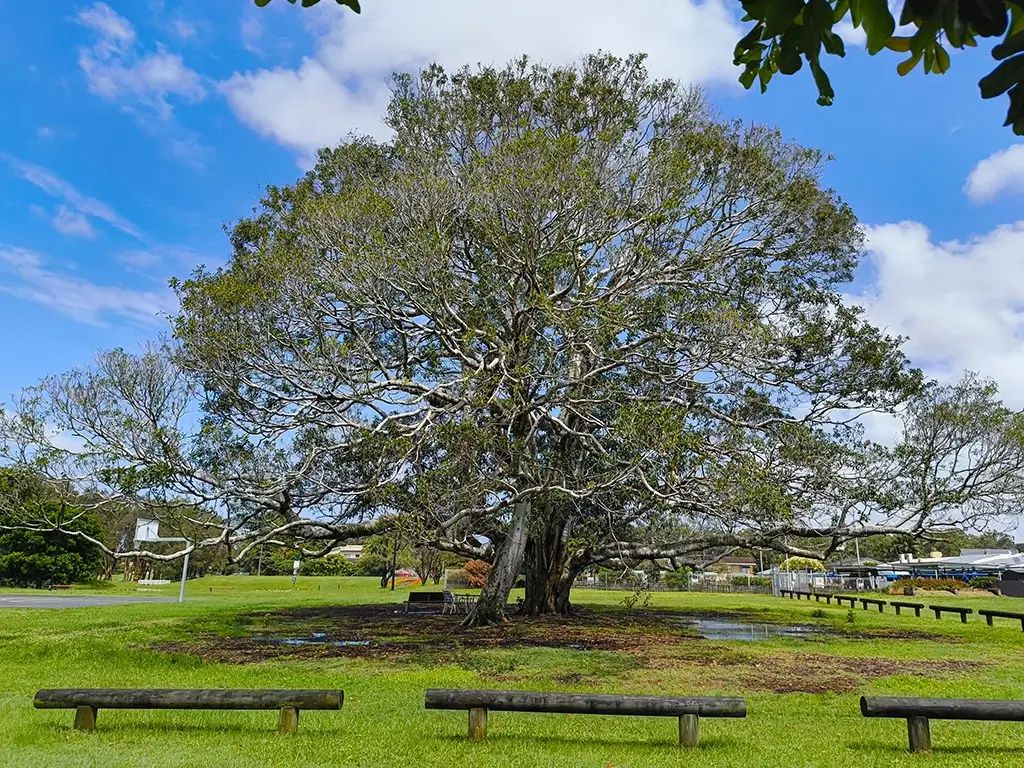
What’s Involved In A Tree Risk Assessment?
There are three individual levels of inspection that can be undertaken when inspecting an individual or group of trees.

Level 1 Risk Assessment
A level 1 visual assessment is conducted to evaluate a tree’s health and structure from a distance on the ground and without any tools of climbing involved. Often referred to as a walk-by-inspection, it is usually conducted when groups of trees need to be assessed in a reasonable amount of time and is done to point out tree’s that need either level 2 or level 3 inspections to further check for risks. The inspection itself focuses primarily on the overall condition of the tree from a brief glance, considering the rate of canopy dieback, any dead branches present, wounds on the bark, cracks, decay or signs of pests and disease. If problems are present and noticed, the tree is usually marked for further assessment later on.
Level 2 Risk Assessment
A level 2 basic assessment involves a detailed visual inspection of the tree and its immediate surroundings and unlike a level 1 assessment, a level 2 assessment is up close and personal and involves the use of tools and equipment to evaluate the health and structural safety of the tree.
The arborist that conducts the assessment will usually utilise some basic tools such as a tomograph, mallet or probe to determine if the tree has any cavities in its trunk or structure. In most instances, this would conclude the assessment, and the information gathered from it would influence the subsequent risk management plan. In the event that the client requests for more information on the condition of the tree(s), a level 3 advanced assessment may be triggered.

Level 3 Risk Assessment
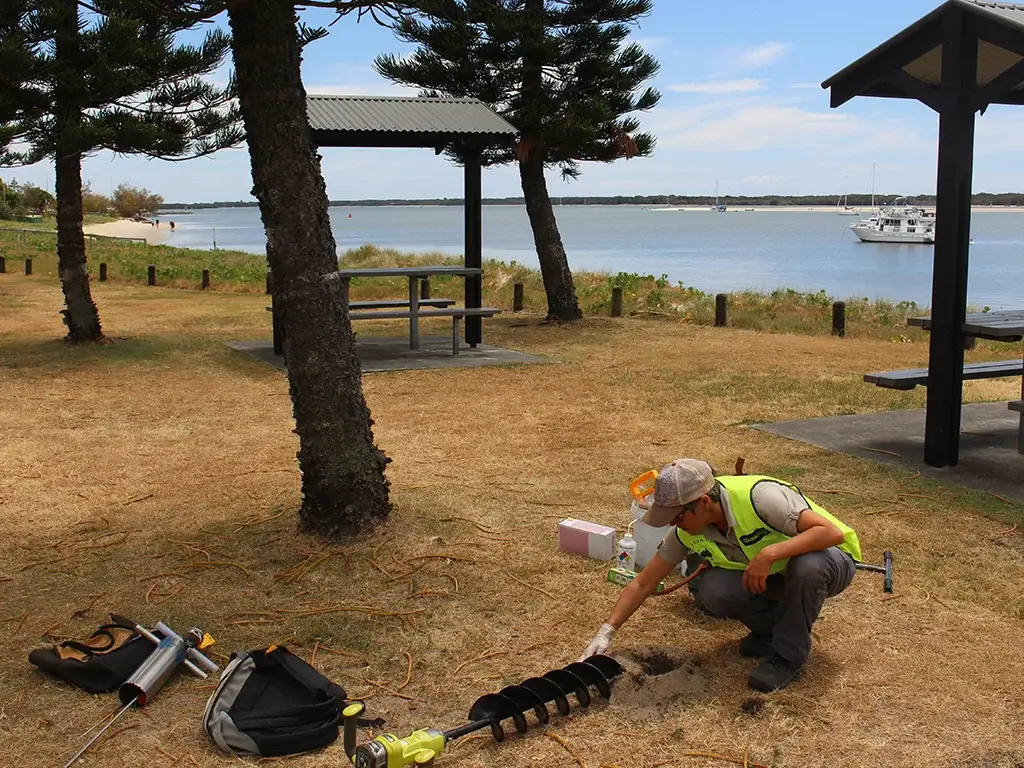
A level 3 advanced assessment is an advanced, thorough and detailed diagnostic assessment of a tree when either a level 2 assessment reveals serious issues with the health or structure of the tree, or the client requests a more detailed report on the condition of the tree. This type of inspection is the most in-depth and can take some time to complete. It involves the use of specialised tools and techniques for testing the soil, roots, trunk, limbs and canopy to learn as much as possible about the health and condition of the tree in question.
Sonic Tomography: A type of ground penetrating radar that measures the time it takes for signals to cross from one side of the tree to the other to determine the density of the wood beyond the bark. This helps assist arborists with locating cavities or weaknesses in the internal structure of the tree itself.
Lab Testing: Conducted with samples take from the soil and roots, it helps determine the conditions of the soil such as nutrient and water levels along with detecting the presence of any pathogens in the tree itself.
While Level 3 assessments do provide highly detailed reports and information on the condition of trees, the amount of time and money invested in the process makes it only worthwhile to conduct in very limited numbers and for trees that are of some importance to the client or environment.
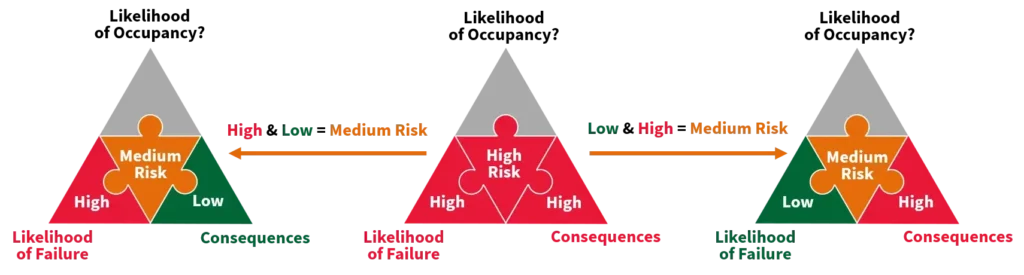
The Tree Triangle of Failure: How Much Risk Does a Tree Pose?
Following the conducted assessments, an arborist will write up a report detailing every aspect of recorded information to be presented within a management plan where applicable. The Risk Rating is a system where arborists, utilising the information they gathered during the assessment process, detail the likelihood of structural failure and the severity of the potential consequences (i.e., injury or property damage) if failure should occur. The tree triangle of failure is a frequently consulted and easily understood diagram that can help dictate when action needs to be taken concerning trees of importance.
A tree risk assessment is an essential part of responsible tree care and management, helping to ensure the safety of people and property while preserving the health of the tree population. By identifying and mitigating risks before they become serious problems, these assessments help maintain healthy, safe urban forests and landscapes. Whether for individual trees or larger woodlands, understanding and managing tree risks is key to long-term sustainability and safety.