Planning & Development
Resolve Tree Constraints Before They Become Costly Project Delays!
CORE SERVICES
Tree Constraints Analysis
Identify significant trees within the project bounds, likely retention requirements and potential development limitations before detailed design begins.
Arboricultural Impact Assessments
Assess how the proposed development may affect existing trees and provide recommendations for retention, removal and protection.
Tree Retention & Removal Assessments
Determine which trees are suitable for retention and where removal may be justified based on condition, significance, risk and development impacts.
Development Application Support
Prepare arboriculture documentation that responds to planning requirements and supports a clear, coordinated application.
Vegetation Management Plans
Establish practical requirements for managing, retaining, removing or replacing vegetation across a project site.
Planning Advice & Design Reviews
Review concept plans and provide practical recommendations before the design becomes difficult or expensive to change or modify.
Council Submissions & Responses
Support project teams with technical information, additional reporting and responses to council questions or information requests.
ARborist Reports
Receive comprehensive yet simple to understand arborist reports that clearly outline potential issues or problems that may arise during project development.
Not Sure Which Assessment Your Project Requires?
Our consultancy team at Heritage are happy to help you with whatever you need!
Prefer to speak with someone instead?
Give our consultancy team a call on 1800 353 053
CASE STUDY
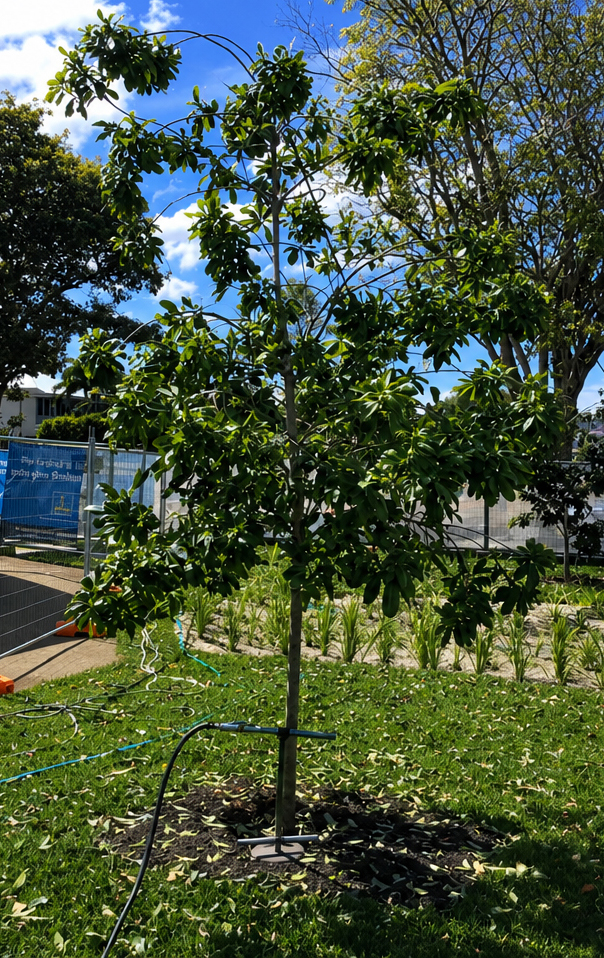
Tree Failing Investigation – Windsor Community Hall
Project Type:
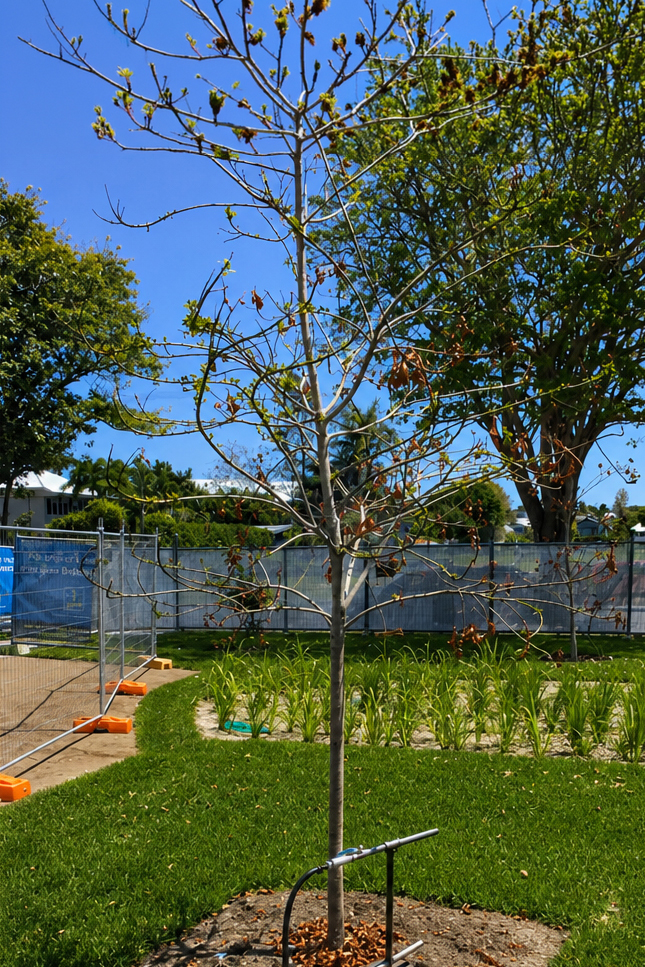
Investigating the cause(s) of several tree’s failing shortly after being planted at the development works being undertaken at Windsor Community Hall.
Project Stage:
Throughout the full duration of construction and development works.
The Challenge:
Understanding and identifying the reasons why several newly planted juvenile trees failed shortly after being planted within the construction site.
Our Approach:
Heritage assessed the trees and worked with the project team to gather background and history around the recent planting, earth moving and redevelopment including recent changes to the tree environment and soil profile.
Read more…
Site soil conditions were assessed and the soil profile was thoroughly investigated. Soil samples were collected for mineral testing (nutrient composition and density).
Four 45L trees were planted in Spring 2023. Three of the newly planted trees failed in the weeks following the planting. It is suspected that underground water might have created waterlogging conditions.
The Outcome:
- Soil investigations following the failure of three newly planted trees revealed.
Read more…
- The presence of underground water at 600mm deep
- High soil electrical conductivity and low acidic soil pH
Our Recommendations:
- Design future plantings with drainage systems to divert the water away from the roots.
- Install replacement trees on mounds so that water drains away and doesn’t allow their roots to become waterlogged.
- Mix the planting soil with a 1:1 ratio of inert materials in volume (coarse washed sand, perlite)
- Implement a Plant Health Care program to correct soil pH or replace soil not fit for planting.
The Result:
The identification of underground water pooling combined with the soil salinity issue allowed the client to adjust and correct the plantings during the construction process to prevent the same issue from arising again in the future.
Download the soil report for a full, comprehensive breakdown of the job and the results gathered.
Planning & Development FAQ’s
When Should A Consulting Arborist Become Involved In A Project?
A consulting arborist can add value at any stage, but the greatest benefit is achieved before the design is fixed – ideally during site due diligence or concept planning. Early involvement allows tree constraints, approval requirements and design opportunities to be identified while changes are still relatively simple and inexpensive. A consulting arborist can still assist later in the project, but the available options may be narrower and the risk of redesign, construction variations and approval delays are considerably higher.
Trees within and adjoining a site can influence building footprints, excavation depths, road alignments, service routes, stormwater infrastructure, retaining structures and construction access. If these constraints are identified after the design has been documented, the project may face redesign costs, approval delays or construction variations.
Early arboricultural input allows the design team to understand the genuine constraints, identify opportunities for tree-sensitive design and resolve likely conflicts while changes are still inexpensive. The objective is not simply to protect trees. It is to help develop a practical, approvable design that can be constructed without avoidable surprises.
What Is An Arboricultural Impact Assessment (AIA) And When Is One Required?
An Arboricultural Impact Assessment evaluates how a proposed development may affect trees within and adjoining the site. It identifies the trees affected, assesses their suitability for retention, evaluates proposed encroachments and specifies how retained trees can be protected.
An AIA may be required where development affects protected vegetation, significant trees, council trees or trees on adjoining land. Requirements vary between authorities and projects.
A well-prepared AIA gives the assessing authority the technical information needed to make a decision. Addressing the likely arboricultural questions before submission can reduce requests for further information, avoid unnecessary redesign and help prevent restrictive approval conditions being imposed because tree impacts were not adequately resolved.
How Much Of The Site Will Tree’s Affect As Developable Area?
That cannot be determined accurately from canopy spread or trunk location alone. Under AS 4970:2025, the initial assessment considers each tree’s Notional Root Zone, Structural Root Zone where relevant, crown dimensions, condition, retention value and relationship with the proposed development.
A Tree Constraints Assessment maps these factors before the layout is fixed. This gives the design team a realistic development envelope and helps distinguish between genuine constraints and areas were design refinement, root investigation or alternative construction methods may recover usable space.
This avoids unnecessarily sterilising parts of the site while reducing the risk of pursuing a design that is unlikely to receive approval or cannot be constructed without significant variations.
Can Trees Be Removed When They Conflict With The Development Plans?
Potentially, but removal is subject to the applicable planning and environmental controls. A recommendation from a consulting arborist does not itself constitute approval. We assess each tree’s condition, structure, retention value, remaining useful life and compatibility with the proposed development. This allows the project team to identify which trees warrant design consideration, which can be retained through practical construction controls, and which may have a defensible basis for removal.
Making these decisions early helps avoid investing in a design that depends on an unsupported removal outcome. Where removal is proposed, we clearly document the arboricultural basis and identify likely approval, replacement planting or offset requirements so they can be incorporated into the project programme and budget.
How Are Tree Protection Zones Determined Under AS 4970:2025?
For most trees, the process begins by calculating the Notional Root Zone. Its radius is generally determined by multiplying the trunk diameter measured at standard height, 1.4 metres above ground level, by 12, subject to the provisions of AS 4970:2025. The Structural Root Zone is assessed separately where proposed works may affect tree stability.
The Tree Protection Zone is the area ultimately designated for protection during construction. It is informed by the NRZ, SRZ, crown requirements, approved encroachments, site conditions and the Project Arborist’s assessment.
Correctly determining these areas during design allows conflicts to be resolved before construction. This reduces the likelihood of discovering significant roots during excavation, stopping work while a solution is developed, or paying for an unplanned change to the construction methodology.
How Does AS 4970:2025 Apply To A Development Project?
AS 4970:2025 provides the recognised framework for integrating retained trees into the planning, design, construction and completion stages of development. It guides the assessment of tree constraints, evaluation of encroachments, preparation of Tree Protection Plans and Specifications, establishment of protection measures, monitoring and Project Arborist involvement.
The Project Arborist does not ordinarily need to remain onsite throughout construction. Their attendance should be programmed around relevant hold points, approved works within or affecting the NRZ or TPZ, changes to protection measures, root-sensitive excavation and activities requiring supervision or certification. Defining these requirements before construction gives the contractor clear responsibilities and allows the necessary arboricultural attendance to be programmed efficiently, avoiding unnecessary supervision costs and unplanned delays.
How Does Receiving Early Arboricultural Advice Reduce Overall Project Costs?
The most expensive arboricultural problems are usually those discovered after approval, detailed design or commencement of construction. An unresolved tree conflict can lead to requests for further information, redesign, additional investigations, restrictive approval conditions, construction variations, stop-work periods or enforcement action where protected trees are damaged.
Early arboricultural involvement allows these risks to be identified and resolved while changes can still be made efficiently. It also provides the evidence needed to challenge unnecessary constraints, justify appropriate removals and develop practical construction methods where tree retention is required.
The value is not simply the cost of a report. It is a clearer approval pathway, fewer avoidable conditions, improved cost certainty and a project that can move from design into construction without preventable delays.
Not Sure Which Assessment Your Project Requires?
Our consultancy team at Heritage are more then happy to help you determine which assessment fits your needs! Speak with our consultancy team below!
Prefer to speak with someone instead?
Give our consultancy team a call on 1800 353 053