
Asset & Risk Management
Know What You Have, Where The Risks Are & What To Do Next!
Managing trees as valuable environmental, community & infrastructure assets.
Trees represent significant environmental, financial and community value. We assist organisations in understanding, managing and protecting these assets through strategic planning, defensible risk assessment and comprehensive asset management.
Supporting Duty of Care
By integrating field assessment with GIS mapping and digital data management, we provide clients with practical information that supports maintenance planning, public safety and long-term urban forest sustainability.
CORE SERVICES
| Plant Health Care Programs | Root Investigations |
| Tree Health Assessments | Pest & Disease Diagnosis |
| Tree Condition & Vitality Assessments | Tree Remediation Planning |
| Tree Pathology | Significant Tree Management |
| Tree Physiology | Tree Health Monitoring |
| Sonic Tomography | Root Zone Management |
| Soil Biology & Microbiology | Advanced Diagnostic Investigations |
| Soil Testing & Nutrient Analysis |
Not sure whether you need an Audit, Inventory or Risk Assessment?
The right starting point depends on what information already exists and what decisions need to be made.
Prefer to speak with someone instead?
Give our consultancy team a call on 1800 353 053
From Reactive Maintenance to Proactive Management.
Reactive tree management often begins with a complaint, visible failure or urgent request. While urgent work will always be necessary, an asset-based approach gives organisations more control over risk, expenditure and long-term tree value. A structured management system can help reduce some of the following issues:
Unplanned Emergency Works
Inconsistent Inspections
Repeat Assessments Of The Same Trees
Reactive Maintenance
Poorly Supported Removal Decisions
Gaps in Organisational Knowledge
Loss of Information
Budget Requests Without Clear Evidence
Decline in Mature Canopy
Confusion About Work Priority
Supporting Duty of Care
Data Designed To Support Action.
Step 1
Defining The Objective
We establish what the organisation needs to understand, improve or demonstrate.
Step 2
Reviewing Existing Information
Heritage reviews available inventories, maps, inspection records, maintenance data and relevant policies.
Step 3
Assessing The Tree Population
Consultants collect the required tree, condition, risk and site information using a consistent assessment framework.
Step 4
Structuring & Mapping
Tree records can be linked to GPS locations and organised for GIS or asset management systems.
Step 5
Setting Priorities
Recommended actions are classified according to urgency, risk, condition and practical management needs.
Step 6
Management Programs
Heritage provides a clear plan for inspections, maintenance, monitoring, replacement and future review.
Prioritise Work According to;
RISK, CONDITION & VALUE
Not every defect requires immediate removal, and not every declining tree presents the same level of concern. Heritage considers the tree, defect, surrounding targets, site use and likely consequences before assigning management priorities. Tree conditions are normally categorised into one of five categories in terms of how urgent action should be taken.
No Immediate Action Required
No Current Action.
Trees that can remain under the standard inspection and maintenance cycle. This tiered approach helps ensure urgent concerns are acted on without treating every tree as an emergency.
Long-Term Renewal / Planning Required

Long-Term Renewal.
Trees requiring succession planning, replacement or staged management rather than immediate intervention.
Routine Management / Treatment Required

Routine Management.
Pruning, monitoring or maintenance that can be incorporated into planned programs.
Near-Term Priority Action Required

Near-Term Priority.
Maintenance or assessment that should be scheduled within a defined timeframe.
Immediate Action Required

Immediate Action.
Conditions requiring urgent control, restricted access, further investigation or works.
RELIABLE OUTCOMES, EVERYTIME.
CASE STUDY
Glenyon Drive, Ashgrove – Tree Failure Investigation
Project Type:
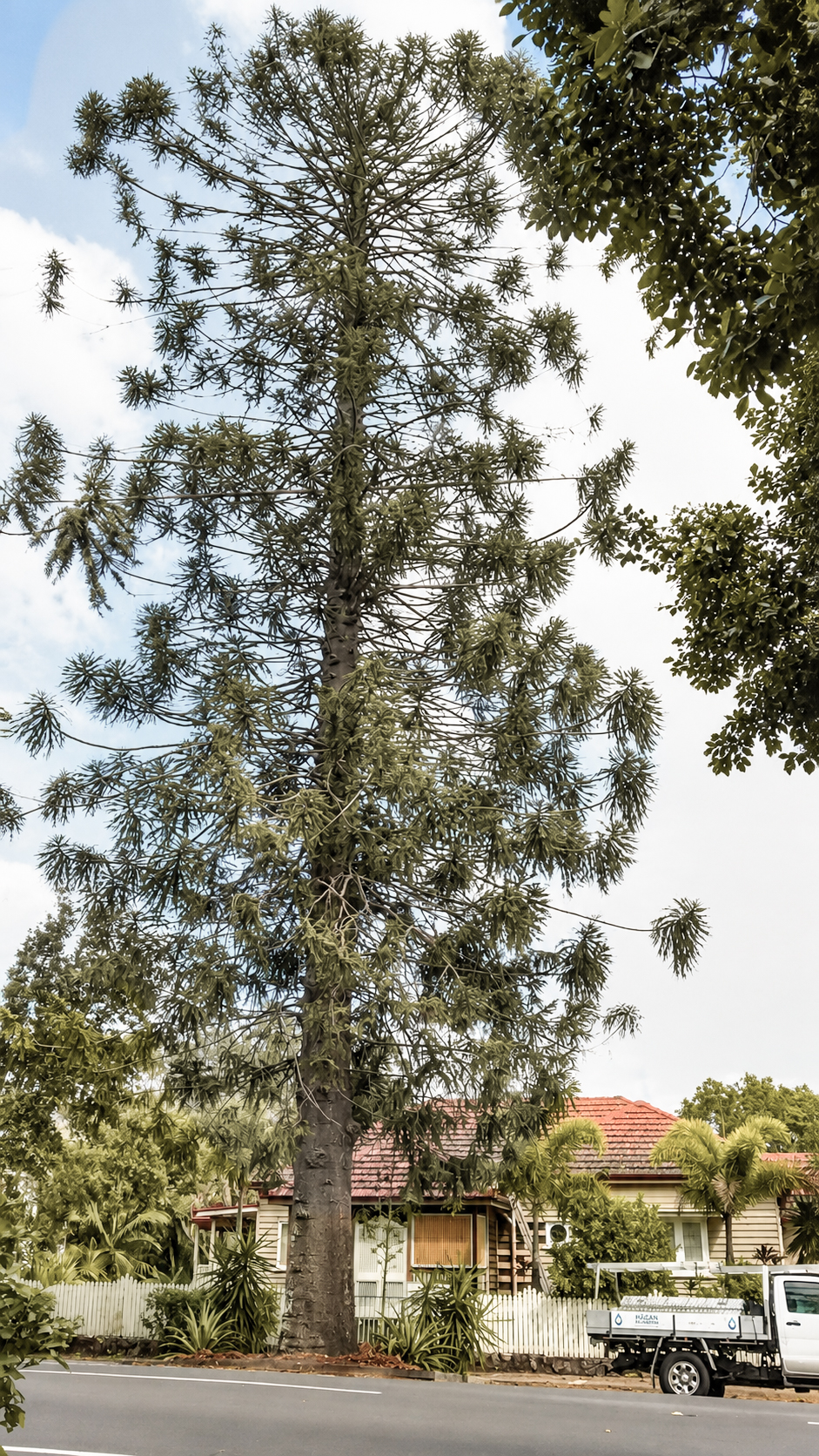
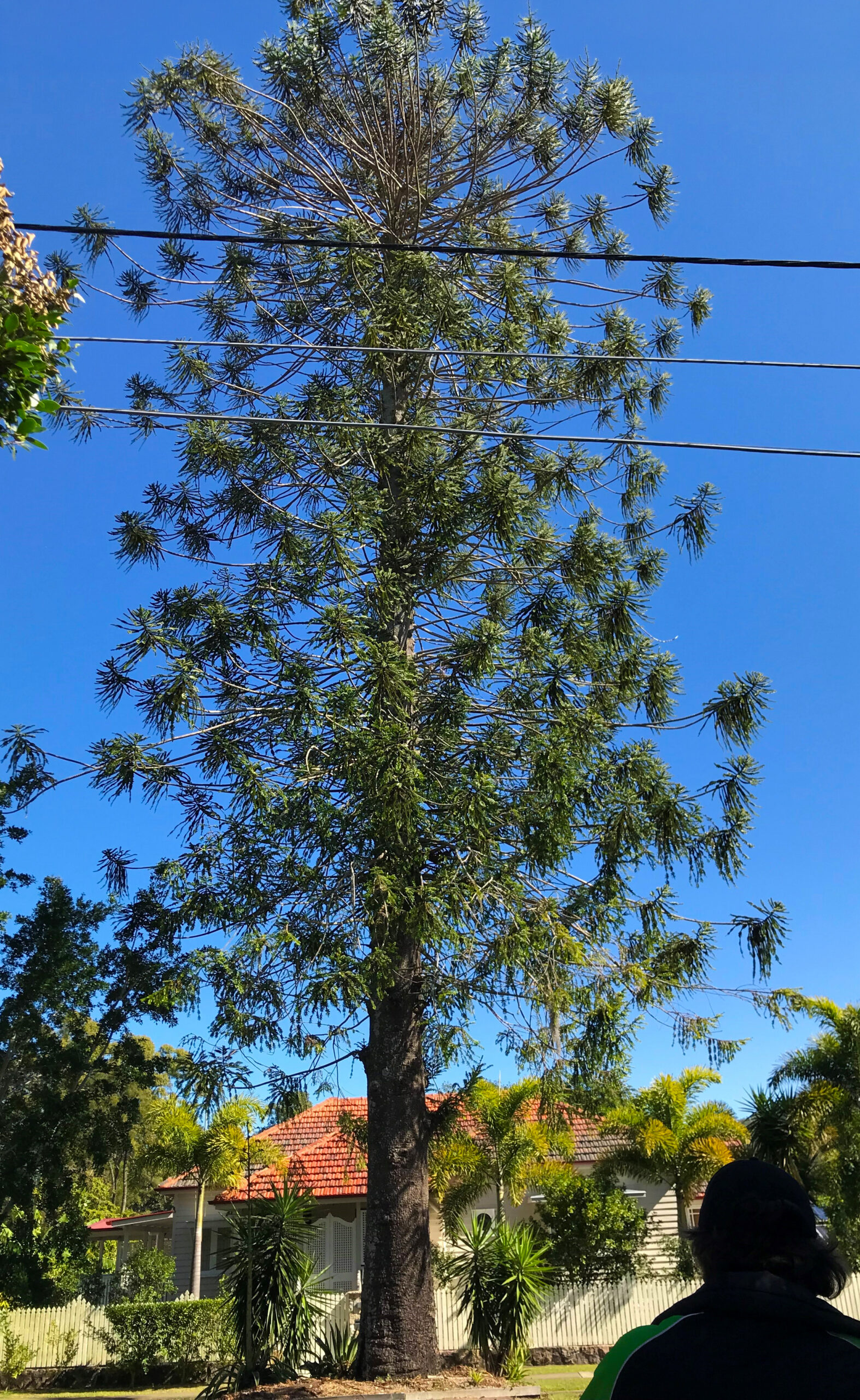
Remediation of Bunya Pines, Araucaria bidwillii
Project Stage:
Intervention of a second failing Heritage Bunya Pine along Glenlyon Dr, Ashgrove.
The Challenge:
Heritage Tree Care, plant health division was contracted to investigate the health of a second failing Bunya Pine along Glenlyon drive, Ashgrove after losing a significant heritage Bunya pine across the road, suspected of Botryosphaeria fungus.
Read more…
Decline symptoms of dying foliage and lateral limbs from the top of the tree and chlorotic leaflets mirrored that of Botryosphaeria in the earlier stages. Tree health intervention strategies urgently needed to be employed to arrest any further decline and to restore tree health.
Our Approach:
The two pines had the same visual symptoms: defoliation and yellowing of older leaves, wilting of limbs and epicormic growth. The investigation was conducted by Heritage Tree Care’s soil scientist, who conducted a visual inspection of the Bunya pines, soil visual health assessments and extracted soil samples for a routine agricultural analysis across three planting beds, identified as Tree 1, Tree 2, and Tree 3…
Read more…
Investigation of these sites uncovered several causes of the pines’ decline primarily related to soil health management issues, too commonly observed nowadays in urban environments impacted by climate change and human pressure. Those being;
- Unseasonal climatic impacts.
- Shallow potential rootzone.
- Severe compaction.
- Unbalanced soil nutrients.
- Impervious soil layer at 250mm.
- Moderate soil alkalinity.
- Soil water management.
Encroachment by urban impacts on Tree Protection Zone.
The Outcome:
The Bunya pines and their soil beds will require an intensive level of intervention for extended longevity and for rebuilding resilience to environmental extremes and urban impacts. It would also be advised to look at proactive investigations on the other trees within to site to ensure they also do not decline in the near future.
Read more…
- Soil Decompaction to 600mm depth on a 1mx1m grid across the root zone.
- Injection of soil mineral additives to correct deficiencies and to assist with improving soil health and structure.
- Deep water hydration to 600mm across the entire root zone with liquid seaweed and mycorrhizal fungi every 2 weeks for 3 to 6 months.
- Within a period of 12 to 18 months the stressors of low soil moisture and mineral decline was corrected and the tree overall health improved with increased green canopy area.
Download the report for a full, comprehensive breakdown of the job and the results gathered.
ASSET & RISK MANAGEMENT
FAQ’S
How Do You Assess Whether A Tree Presents A Risk?
Tree risk assessment considers more than the presence of a defect. Our consultants are trained and experienced in qualitative and quantitative assessment methods, including ISA Tree Risk Assessment Qualification methodologies and Quantified Tree Risk Assessment. We select the assessment method and level of detail according to the tree population, site, targets, client brief and purpose of the assessment.
The process considers credible failure modes, the likelihood of failure within a defined timeframe, the likelihood of the failed tree or tree part striking a target, and the potential consequences. Our reports clearly document the observations, methodology, limitations, risk conclusions and recommended controls. This gives clients an evidence-based and traceable record that supports operational decisions, duty-of-care processes, insurance matters and legal review where required.
What Is The Difference Between A Hazard & A Risk?
A hazard is a condition with the potential to cause harm, such as deadwood, a structurally compromised branch union, root damage or internal decay. Risk considers the likelihood of that hazard resulting in harm and the severity of the potential consequences. It therefore includes the likelihood of failure, the likelihood of impact and the people, property or activities that may be affected.
A significant defect over a low-use area may present a different level of risk from the same defect above a school entrance, roadway or heavily occupied public space. Understanding this distinction prevents resources being directed solely towards trees that look concerning. It allows inspection and maintenance budgets to be prioritised towards the trees and locations presenting the greatest actual risk.
How Often Should Trees Be Inspected?
There is no single inspection interval suitable for every tree or site. The appropriate frequency depends on the tree species, age, condition, known defects, surrounding targets, occupancy, environmental exposure, previous management and the consequences of potential failure. A high-use school, road corridor or public facility may require a different inspection regime from a low-use reserve.
Inspection programs should also include event-driven reviews following severe weather, construction activity, changes in site use, damage or a significant change in tree condition. We develop inspection intervals and escalation criteria appropriate to the asset population. This supports reasonable care without imposing the cost of assessing every tree at the same frequency or level of detail.
What Is A Tree Asset Inventory & Why Do We Need One?
A tree asset inventory is a mapped, structured record of an organisation’s tree population. Depending on the client’s requirements, it may include location, species, dimensions, condition, risk information, maintenance requirements, inspection history, habitat value, useful life and supporting photographs.
For councils, government agencies, educational facilities and large property portfolios, an inventory turns an unknown tree population into a manageable asset base. It allows work to be prioritised, budgets to be forecast, contractor performance to be monitored and inspection histories to be retained. We collect information digitally using GIS, GPS and field data systems. The dataset can be structured to integrate with the client’s existing asset-management platform and reporting requirements, avoiding duplicated data collection and disconnected records.
Who Is Liable If A Tree Fails & Causes Damage?
Liability cannot be determined by the arborist alone. It depends on the circumstances, the applicable law, control of the land or tree, what was reasonably foreseeable and whether reasonable steps were taken in response. A tree failure does not automatically establish negligence. Equally, the absence of an inspection or management record may make it difficult to demonstrate how the tree was being managed.
A documented inspection and risk-management program provides evidence of what was known, how it was assessed and what action was taken. This can support an organisation’s duty-of-care processes and assist insurers or legal advisers if an incident is investigated. Our role is to provide objective arboricultural evidence. Legal liability remains a matter for the relevant parties, insurers, legal advisers and ultimately the courts.
How Do You Put A Value On A Tree?
The appropriate valuation method depends on why the valuation is required. A valuation may be undertaken for tree damage or unlawful removal, compensation, insurance, development assessment, asset reporting, amenity loss or comparison of retention and replacement options. Different methodologies consider different components of value and are not interchangeable.
We establish the purpose of the valuation first, then select and document an appropriate recognised method. The assessment may consider species, dimensions, condition, location, remaining useful life, amenity contribution, replacement cost and the limitations of the selected method. A clearly documented valuation provides a more defensible basis for negotiation, compensation, insurance and strategic decision-making than relying on an arbitrary replacement figure.
What Is A Tree Asset Management Plan?
A Tree Asset Management Plan provides the framework for managing a tree population across its lifecycle. It brings together the asset inventory, condition and risk profile, inspection requirements, maintenance priorities, budget forecasts, renewal planning, planting strategy and performance measures.
For councils, government agencies and large landholders, the plan supports a transition from reactive work to a structured and prioritised program. High-risk and high-value assets can be identified, maintenance can be scheduled efficiently, and future canopy loss can be addressed through planned succession planting. This improves budget certainty, reduces emergency expenditure and gives decision-makers a defensible basis for allocating resources across the tree population.
How Can Strategic Tree Risk Management Reduce Costs?
The objective is not to eliminate every possible tree failure. That is neither practical nor achievable. The objective is to identify material risks and direct resources towards proportionate controls. A structured program helps clients avoid blanket pruning, unnecessary removal, duplicated inspections and repeated emergency responses. It also identifies where a lower-cost intervention, such as target management, selective pruning or monitoring, may be more appropriate than removal.
By combining risk assessment, asset data, programmed inspections and maintenance planning, organisations can move expenditure from reactive emergencies into forecasted works. This provides stronger cost control while retaining the environmental, community and financial value of trees that can be responsibly managed.
Need A Clearer Picture of your Tree Assets?
Heritage can help you build a reliable inventory, identify genuine priorities and develop a practical plan for risk, maintenance and long-term renewal.
Prefer to speak with someone instead?
Give our consultancy team a call on 1800 353 053