
Construction & Compliance
Protecting Tree Assets While Supporting Efficient Project Delivery Without Delays.
Core Services.
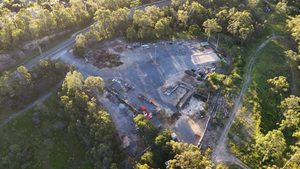
TPZ’s & Nominal Root Zones
Identify the areas required to protect tree roots, stability and long-term viability during construction.
Construction Supervision
Supervise sensitive works close to retained trees and provide real-time advice when unexpected conditions are encountered.
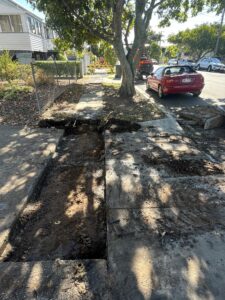
Root Investigations
Locate and assess roots before excavation, design changes or service installation.
Vacuum Excavation Supervision
Guide non-destructive excavation around tree roots and assess the roots exposed during the process.
Compliance Inspections
Inspect tree protection measures and construction activities at required project stages.
Practical Completion Certification
Confirm whether arboriculture requirements have been completed and identify any outstanding actions before project close-out.
Not Sure What Level Of Inspection You Need?
Our consultancy team are more then happy to help you determine which assessment fits your needs!
Prefer to speak with someone instead?
Give our consultancy team a call on 1800 353 053
Practical Advice For Real Site Conditions.
Construction sites change. Plans are revised, services move and unexpected roots appear. Heritage provides clear advice that helps the site team respond without unnecessarily stopping work or compromising retained trees. Reports and site records can be prepared for project managers, certifiers, councils and other approval authorities. Depending on the project, our involvement may include:
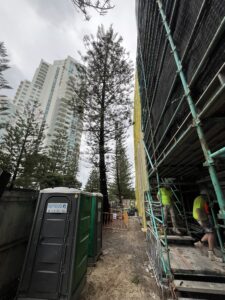
Tree Protection Zone Verification
Construction Hold-Point Inspections
Root Exposure Assessment
Excavation and Trenching Supervision
Vacuum Excavation Supervision
Advice on Access and Temporary Works
Assessment of Proposed Design Changes
Tree Damage Inspections
Corrective Action Recommendations
Site Inspection Reports
Photographic Compliance Records
Practical Completion Certification
Handover and Post-Construction Recommendations
How We Support The Construction Process.
Step 1
Review Approvals & Plans
We review the development approval, arboriculture reports, construction plans and relevant tree protection conditions.
Step 2
Establish Site Controls
Heritage confirms tree protection zones, fencing, access restrictions and required protection measures before works begin.
Step 3
Brief The Project Team
We explain the relevant requirements to the builder, site manager and contractors so responsibilities are clear.
Step 4
Supervise Within TPZ.
A project arborist attends works where roots, excavation or construction activity may affect retained trees.
Step 5
Inspect & Document Compliance
Heritage records site conditions, completed controls, observed impacts and any required corrective actions.
Step 6
Certify Completion
At project close-out, we assess whether arboriculture requirements have been met and prepare the required completion documentation.
CASE STUDY.
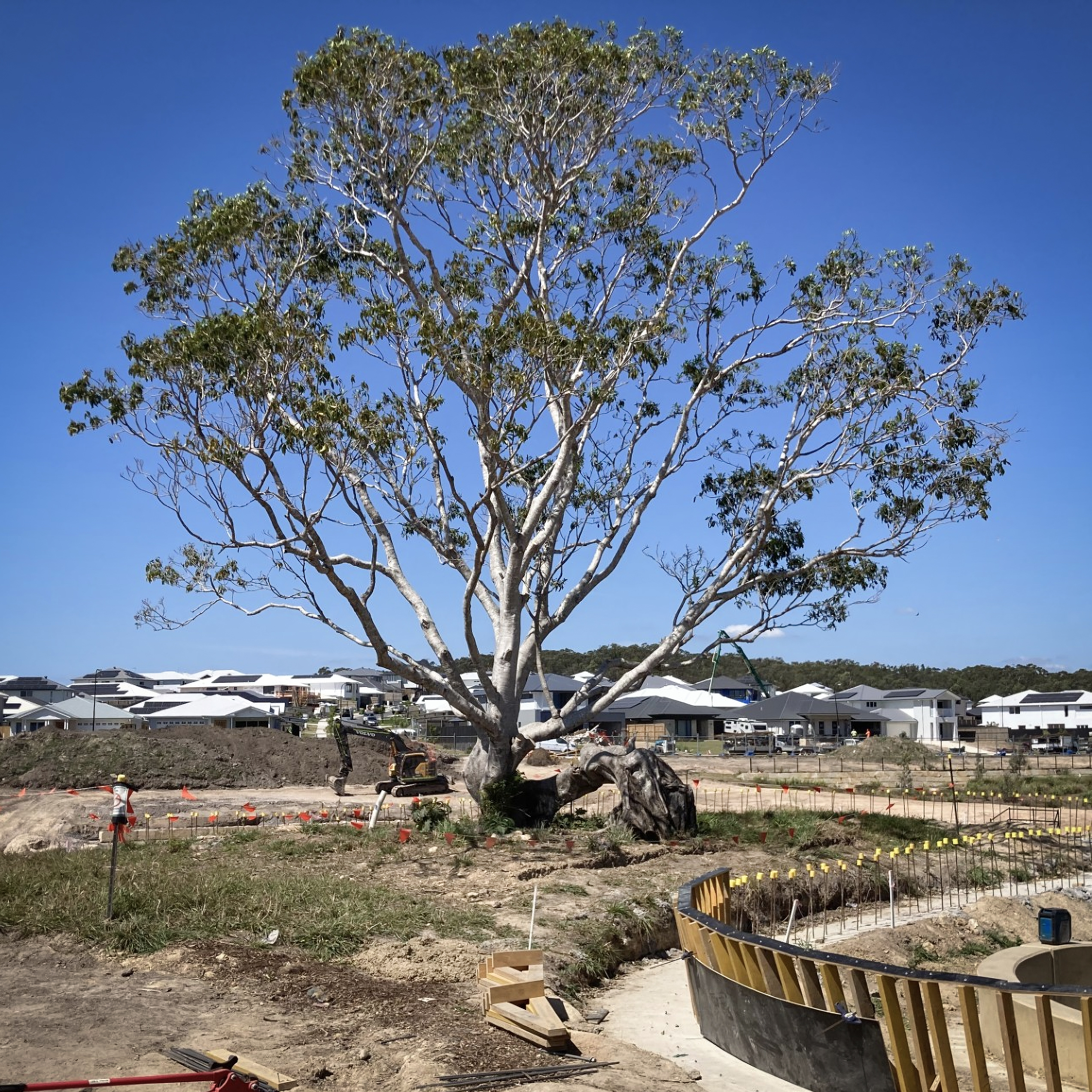
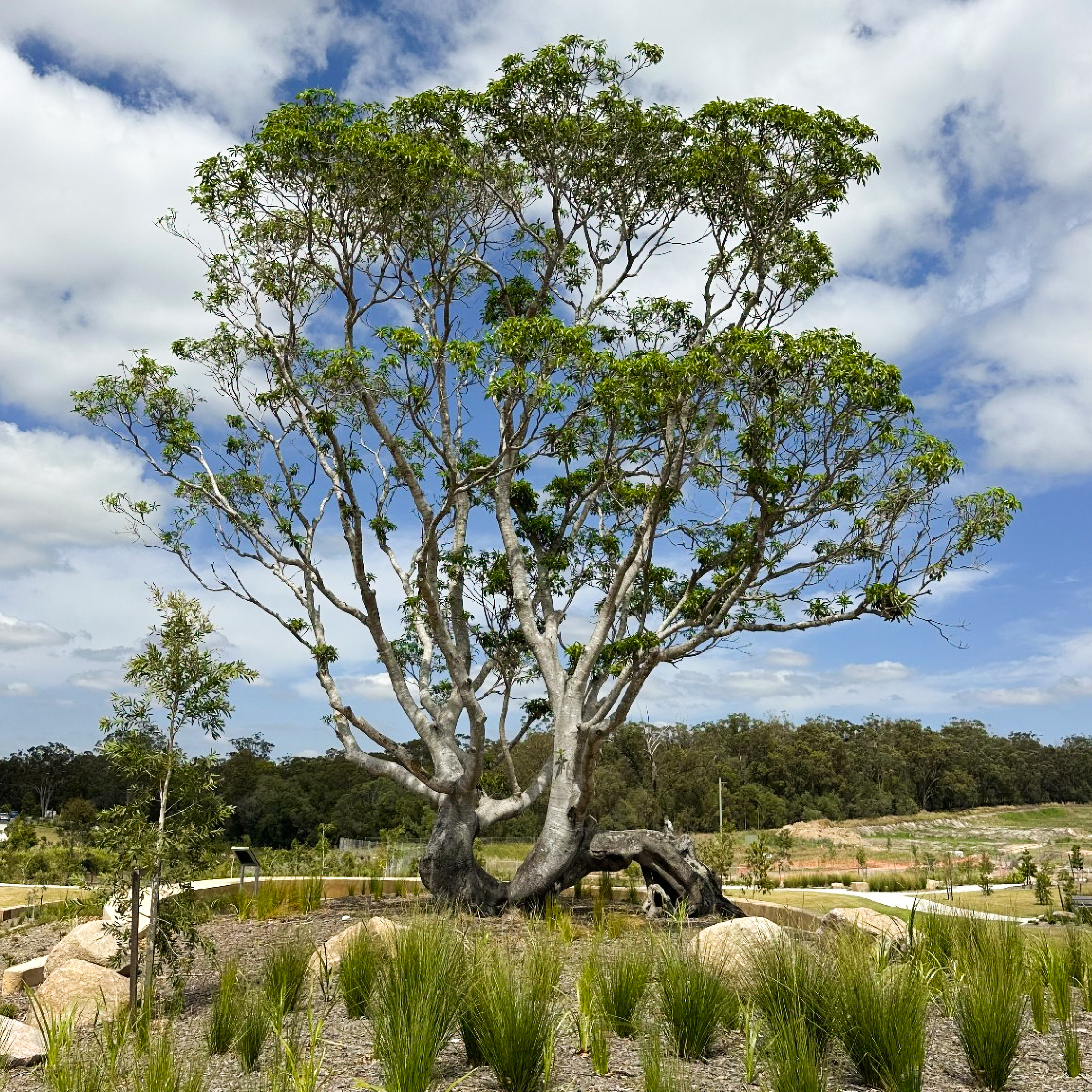
Remediation Of Recently Transplanted Tree – Shoreline Linear Open Space
Project Type:
Declining Ficus Tree Investigation.
Project Stage:
Reviving a recently transplanted mature large Ficus tree including soil testing.
The Challenge:
Reviving a declining large mature transplanted Ficus tree in a development site.
Our Approach:
Heritage assessed the tree, the site, the soil conditions, the growing environment of the subject tree. Soil investigations: soil is assessed, sampled, tested for minerals to identify potential lacking minerals or minerals in excess (toxicity).
The Outcome:
- A soil report outlines the main soil issues and main reasons for decline.
- Recommendations for soil improvement and remediation.
- Customisation of a plant health care program and soil remediation.
- Implementation of soil applied treatments.
Construction & Compliance FAQ’s.
What Does A Project Arborist Do During Construction/Development?
The Project Arborist translates the approved arboricultural requirements into practical controls that the construction team can implement. This may include confirming tree protection before site establishment, reviewing construction methodologies, preparing Arboricultural Work Method Statements, attending scheduled hold points, supervising approved works affecting retained trees, documenting site conditions and certifying compliance within their area of responsibility.
The Project Arborist does not need to remain onsite throughout the build. Attendance is targeted to the stages where arboricultural risk exists, particularly works affecting a Notional Root Zone or Tree Protection Zone. This provides the contractor with timely technical direction while avoiding unnecessary supervision costs and helps prevent a manageable issue from becoming a variation, delay or compliance breach.
Who Determines The Project Arborist Requirements?
The requirements may be established by the determining authority through development conditions, endorsed plans or approved technical documentation. They may also arise from the Arboricultural Impact Assessment, Tree Protection Specifications, Tree Protection Plan, project contract or construction methodology.
Requirements vary between projects. Some authorities nominate qualifications, inspections, hold points, reporting responsibilities and certification requirements. Others require the Project Arborist to submit documentation or obtain acceptance before particular works can proceed.
We review the complete approval package at the beginning of the project, identify the applicable requirements and clarify any inconsistencies with the determining authority. This gives the client and contractor a defined scope, inspection schedule and compliance pathway before construction begins.
How Do You Work With The Client, Design Team & Determining Authority?
Our consulting arborists act as the technical link between the client, design team, construction team and determining authority. We interpret the arboricultural conditions, review the design and construction methodology, identify conflicts and develop practical solutions that can be documented and presented to the relevant authority. Where clarification or approval is required, we liaise with the authority, respond to technical queries and revise the arboricultural documentation as necessary.
This coordination is often where the greatest project value is created. It prevents different parties working from conflicting information, reduces repeated requests for clarification and helps resolve issues before they affect the programme. Our objective is to provide a clear, defensible and buildable arboricultural pathway that helps move the project through approval, construction and close-out efficiently.
When Is A Project Arborist Required Onsite?
Attendance may be required by the development conditions, approved Arboricultural Impact Assessment, Tree Protection Specifications, Tree Protection Plan or an accepted Arboricultural Work Method Statement.
Typical attendance points include:
▪ Before site establishment and machinery access
▪ Installation or alteration of tree protection measures
▪ Excavation, demolition or service installation affecting an NRZ or TPZ
▪ Root investigation or approved root pruning
▪ Changes to soil levels or drainage around retained trees
▪ Implementation of an Arboricultural Work Method Statement
▪ Removal of nearby trees or structures
▪ Practical completion and compliance certification
We develop an inspection schedule around the construction programme so the necessary attendance can be booked in advance. This reduces unnecessary site attendance while preventing an overlooked hold point from stopping work.
What Is An Arboricultural Work Method Statement?
An Arboricultural Work Method Statement explains how a specific activity affecting a retained tree will be undertaken without creating an unacceptable impact on its health, structure or stability. It is commonly required where excavation, demolition, service installation, access, level changes or construction activity is proposed within a tree’s NRZ or established TPZ.
Depending on the activity, the Work Method Statement may define:
▪ The location and extent of the proposed work
▪ The sequence of construction
▪ Excavation depths and construction tolerances
▪ Machinery, equipment and access requirements
▪ Tree, root and soil protection measures
▪ Non-destructive root investigation requirements
▪ Root pruning protocols and limitations
▪ Project Arborist supervision and hold points
▪ Contingency procedures for unexpected roots
▪ Reinstatement, monitoring and reporting requirements
The Work Method Statement converts a broad approval condition into a controlled, site-specific construction process. This gives the contractor a clear methodology, provides the determining authority with confidence in the proposed approach and reduces the likelihood of unplanned work stoppages or variations.
What Is An Arboricultural Hold Point?
A hold point is a defined stage where specified work cannot proceed until the required arboricultural inspection, supervision or written clearance has been completed. For example, excavation within an NRZ may need to be inspected before roots are pruned, footings are installed or the excavation is backfilled. Once the work has been covered, the evidence needed for compliance certification may no longer be available.
Hold points should be identified in the Tree Protection Specifications, Arboricultural Work Method Statement and construction programme before work begins. Scheduling them properly allows the Project Arborist to attend when needed, document the work and provide the required clearance without unnecessarily delaying the next trade.
What Happens If Work Is Required Within An NRZ or TPZ?
Under AS 4970:2025, the extent of proposed encroachment is assessed against the tree’s Notional Root Zone. Its significance depends on the area and location affected, whether the work enters the Structural Root Zone, and factors such as species, condition, root distribution, soil conditions and previous disturbance.
The TPZ is the area designated for protection during construction. Work within it must not proceed informally. It needs to be permitted by the approved documentation or accepted by the determining authority and undertaken in accordance with an Arboricultural Work Method Statement where required.
Further investigation may also be necessary before the methodology can be finalised. Resolving this process before excavation begins protects the tree, gives the contractor clear instructions and reduces the risk of machinery standing idle while an unexpected root conflict is assessed.
How Can We Construct Close To Retained Trees Without Compromising Them?
Successful tree retention depends on managing root severance, soil compaction, excavation, filling, altered drainage, contamination and physical damage to the canopy and trunk. We review the proposed construction methodology and develop controls that respond to the actual site conditions. These may include adjusted footing locations, suspended or bridged structures, trenchless service installation, controlled excavation, temporary ground protection and staged access arrangements.
Where an impact cannot be avoided, we assess whether it can be accommodated without making the tree unviable and document the required process through the Tree Protection Specifications and Arboricultural Work Method Statement. Resolving these details before construction provides greater cost certainty and avoids developing a solution in the field while contractors, machinery and the programme are waiting.
What Documentation Do You Provide At Project Completion?
At completion, we can provide an arboricultural compliance or practical completion report documenting the inspections undertaken and the level of compliance observed during the project.
Depending on the determining authority’s requirements, this may include:
▪ Inspection and hold-point records
▪ Dated photographic evidence
▪ Approved Arboricultural Work Method Statements
▪ Records of supervised excavation and root pruning
▪ Confirmation of tree protection measures
▪ Approved design or methodology changes
▪ The condition of retained trees at completion
▪ Outstanding monitoring or maintenance requirements
The determining authority or appointed certifier decides whether the relevant conditions have been satisfied. Our report provides the clear and traceable evidence needed to support that decision, reducing the risk of unresolved arboricultural conditions delaying practical completion, handover or final approval.
Need Arboriculture Support During Construction?
Our consultancy team are more then happy to help you determine which assessment fits your needs!
Prefer to speak with someone instead?
Give our consultancy team a call on 1800 353 053