
• Skip to main content
  • Skip to header right navigation
  • Skip to site footer
1800 353 053
  • Facebook
  • YouTube
  • Instagram
  • LinkedIn
Heritage Tree Consultancy

Heritage Tree Consultancy

  • About
  • Explore VOGT
    • Geo Injector Mini
    • Geo Injector Maxi
    • Geo Injector Pro
  • Services
    • Asset & Risk Management
    • Tree Science & Diagnostics
    • Construction & Compliance
    • Planning & Development
    • Soil & Plant Health
  • Insights
  • Contact Us
    • Locations
      • Brisbane
      • Gold Coast
      • Redlands
      • Toowoomba
  • Get a quote
Target leaf spot

Identifying Diseases: Target Leaf Spot (Aulographina eucalypti)

A fundamental overview of the Target leaf spot disease, the symptoms and optional treatments available.

As part of our comprehensive ‘Identifying Diseases’ series, this article takes a focused look at one of the most common leaf spot diseases that targets trees native to Australia. Target leaf spot (Aulographina eucalypti) is an aggressive fungal disease that targets and attacks a variety of unique eucalypti tree species found throughout Australia, especially in Queensland and other sub-tropical environments.


Targeted Trees:

The most common and distinctive disease that attacks most eucalypt species in south-eastern Australia and is most often found (not exclusively) in the Brisbane and Cairns area. Target leaf spot (Aulographina eucalypti) often targets the following trees:

  • Shining gum (E. nitens)
  • Sydney blue gum (E. saligna)
  • Dunn’s white gum (E. dunni)
  • Rose gum (E. grandis)
  • Smooth-barked apple (Angophora costata)
  • Blackbutt (E. pilularis)
  • Gympie messmate (Eucalyptus cloeziana)

It can also on occasion affect a variety of other non-eucalyptus native trees, although this is uncommon.
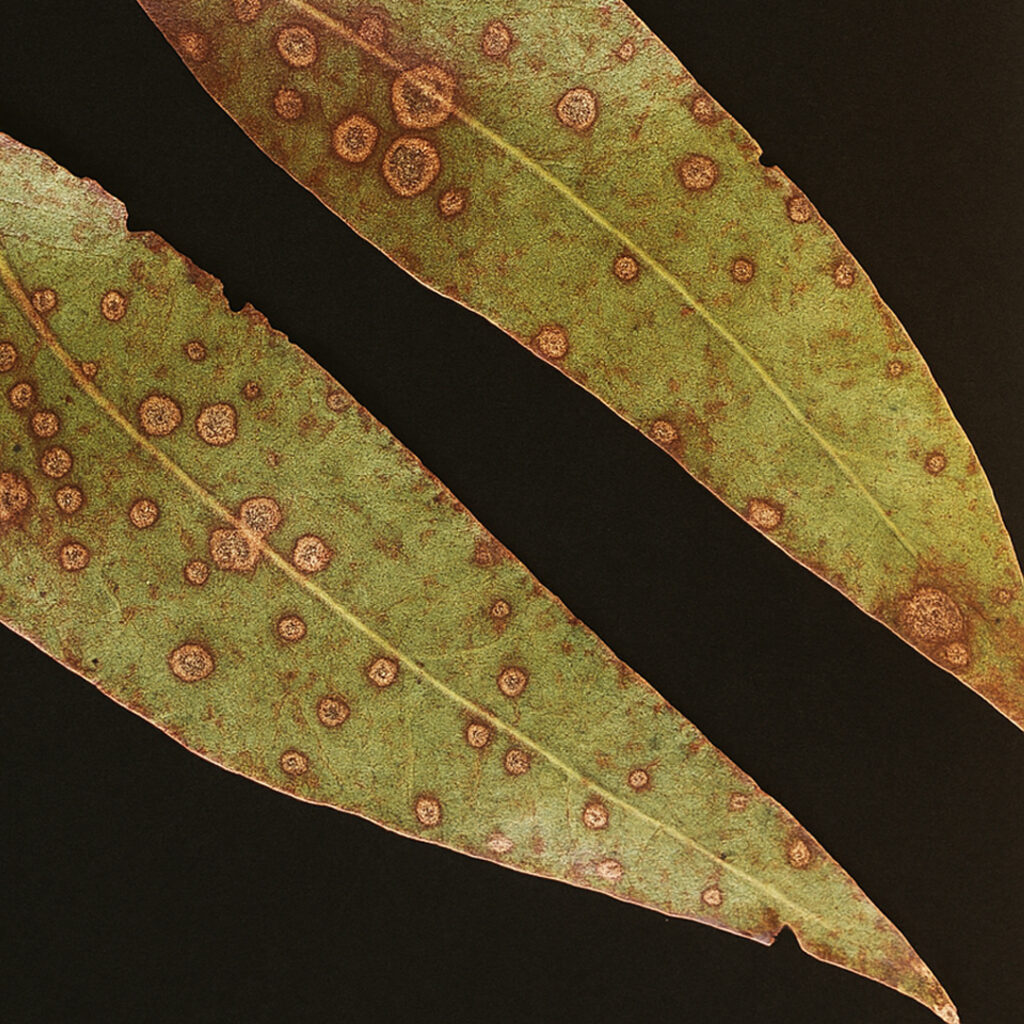
A heavily infected eucalypt leaf covered in Target spots, showcasing the fungal disease.

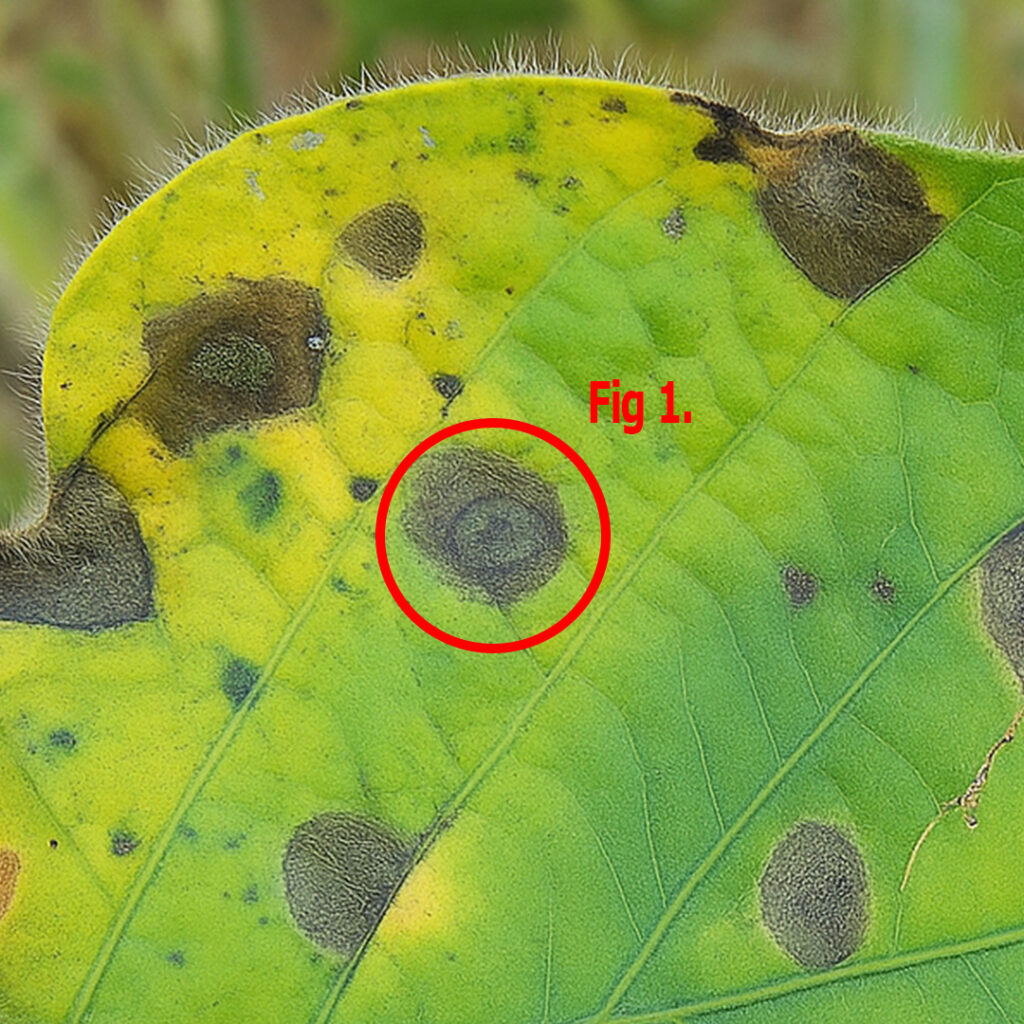
Fig 1. The formation of the circular rings within the spots that gives Target leaf spot it’s name.

Symptoms:

The most distinctive of all the leaf spot diseases that target eucalypts across Queensland and New South Wales. Target spot usually starts as singular spots ranging in size between 1-15mm in width and takes on a circular shape. The fungi have a yellowish-brown, sometimes dark brown colour with a concentric pattern in which it gets its name.

They tend to form around the center of the leaf first and will tend to congregate into a mass if the host leaf is heavily infected. These spots are often raised above the surface of the leaf and have a corky texture but very rarely penetrate to the other side of the leaf.

Younger, less developed leaves are more at risk to infection than the older, hardened leaves. However, the lesions tend to be larger and more easily visible on the older infected leaves that are found lower in the canopy, especially in the areas well shaded from the sun. Leaves that find themselves heavily infected are often shed prematurely which subsequently leads to a noticeable reduction in the fullness of the lower crown as a result.


Causes:

Outbreaks of Target leaf spot (Aulographina eucalypti) occur most frequently during periods of high humidity or rainfall while within its optimal temperature window. Since sporulation (the release of spores) only occurs while the fruiting bodies are both wet and within its ideal temperature range of 15 to 20 degrees Celsius, this leaves spring and early summer as the most optimal time for the fungal infection to spread.

Lesions caused from Target leaf spot on lightly infected leaves, stems and fallen leaves are all potential avenues of further spreading the disease to fresh trees, which is why it is absolutely vital to ensure any green waste is disposed of correctly as the lesions caused by the fungus can survive for an incredibly long amount of time.
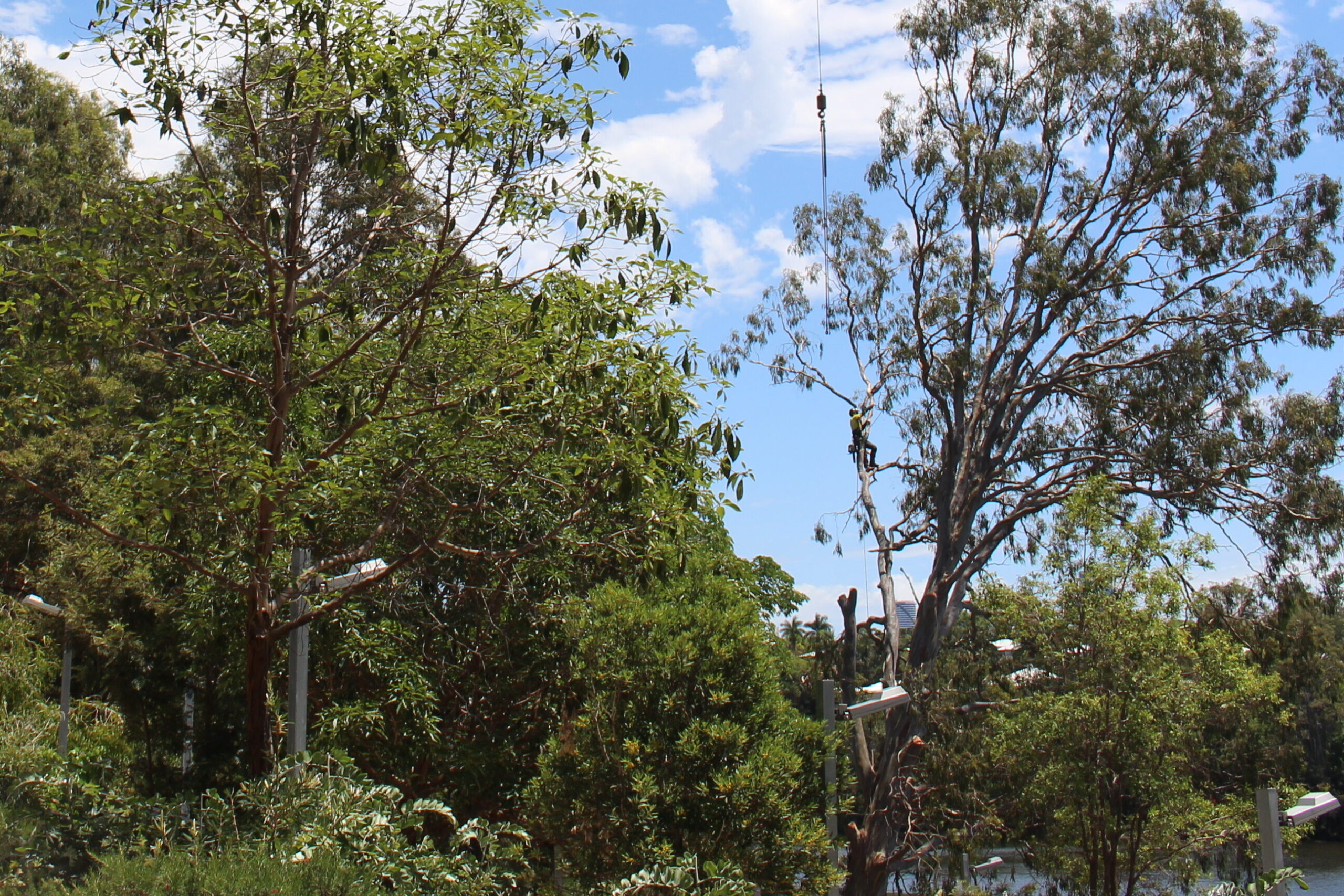
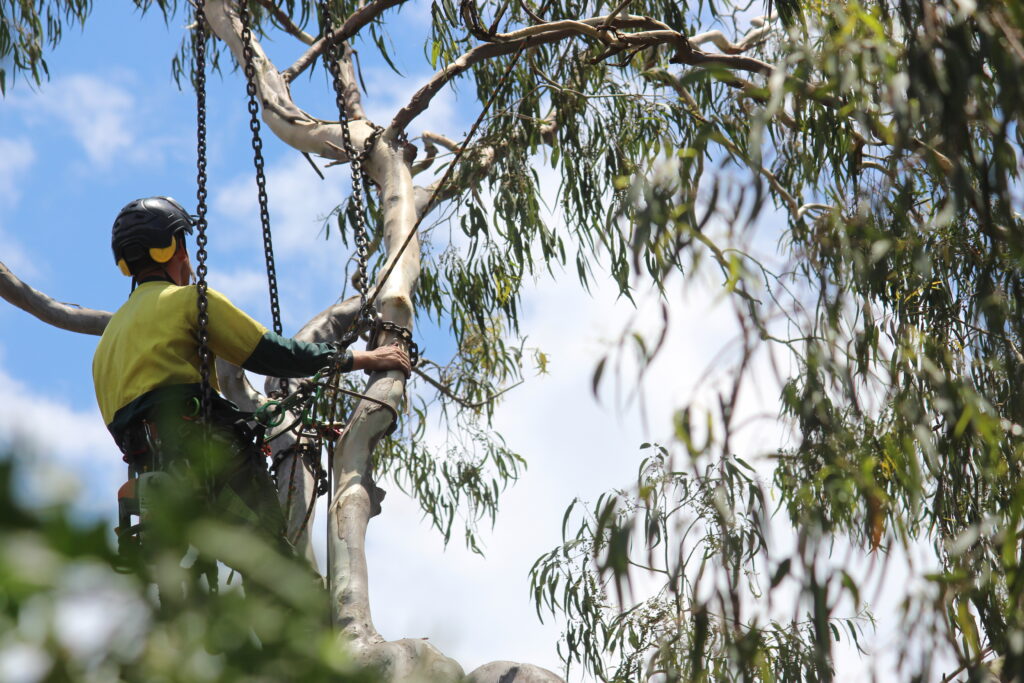
Professional tree pruning operation to reduce problematic branches and limbs from a council tree.

Trained climber conducting a pruning job to remove problematic branches and limbs from a tree.

Management & Treatment:

Most attacks by Target leaf spot (Aulographina eucalypti) are usually sporadic and eventually pass without any intervention needed, especially with established trees. However, if the disease returns frequently every single year, measures should be taken to identify the cause and take the appropriate measures.

Since the disease usually passes between leaves in close proximity to one another, reducing the crowding of the canopy especially with trees that have overlapping canopies can dramatically reduce the risk of infection. Pruning is an effective option to handle this course of action but should be left to trained professionals, especially in the case of tall, well established trees that require climbing to reach the canopy.


Further Resources & Research:

Leaf spot diseases. (2024, March 8). Queensland Government. Retrieved July 15, 2025, from https://www.business.qld.gov.au/industries/farms-fishing-forestry/forests-wood/pests-diseases/trees-timber/leaf-spot-disease

Carnegie, AJ, Lawson, SA, Smith, TE, Pegg, GS, Stone, C, McDonald, JM, 2008, Healthy hardwoods: a field guide to pests, diseases and nutritional disorders in subtropical hardwoods, Forest & Wood Products Australia, Victoria.

Dyer, M. D. (2021, February 23). Eucalyptus Tree Diseases: Tips On Treating Disease In Eucalyptus. Gardening Know How. Retrieved July 15, 2025, from https://www.gardeningknowhow.com/ornamental/trees/eucalyptus/eucalyptus-tree-diseases.htm

Contact us
Heritage Consultancy
  • 1800 353 053
    (07) 3715 5444
Brisbane
  • 25 Spine Street
    Sumner Q 4074
Toowoomba
  • Wilkinson St
    Harlaxton Q 4350
Gold Coast
  • Barnett Place, Molendinar, Q 4214
Redlands
  • Mt Cotton Rd
    Burbank Q 4156
  • Facebook
  • YouTube
  • Instagram
Certification
Registered with OnlineInduction.com
Capability Statement

Copyright © 2026 ยท Capability Statement ยท Policies

Get A Quote – Consultancy

Name(Required)
Address(Required)
I am interested in…(Required)
Provide us with additional information regarding your inquiry here. Otherwise you can leave blank.

Supporting Successful Projects Before Construction Begins.

The most effective arboricultural outcomes are achieved during the earliest stages of project planning. By identifying opportunities and constraints before detailed design, Heritage Consultancy assists clients in reducing project risk, minimising redesigns, avoiding construction variations and achieving efficient planning approvals.

Our consultants work closely with developers, architects, planners and engineers to integrate arboriculture into the design process, delivering practical solutions that balance project objectives with environmental and legislative requirements.

Core Services

Arboricultural Impact Assessments (AIA)

Tree Constraints Analysis (TCA)

Development Application Support

Tree Retention & Removal Assessments

Vegetation Management Plans (VMP)

Tree Protection Plan (TPP)

Arboricultural Specifications

Concept & Detailed Design Reviews

Council Liaison & Regulatory Advice

Environmental Due Dilligence

Explore Planning Services Here!

24 Month Plan – Included Services

Treatment of Pre-Existing Stressors.

Treatment of pre-existing environmental stressors present in or around the site.

Plant Tissue Testing.

Performed once every two (2) months. Undertaken to determine what kind of nutrients a plant is absorbing from the ground.

Read more…

Soil Testing.

Performed once every two (2) months. Testing conducted to identify problems or deficiencies with the soil.

Read more…

Soil Microbial Assessments.

Performed once a month. Used to determine the fertility and microbial activity present within the soil, including the presence of diseases and fungi.

Read more…

Comprehensive Agronomist Reports & Consultations.

You may request a full, comprehensive agronomist report at any time, to help you better understand the impact our services make.

Read more…

Nutritional Treatment Plan.

Regular and periodic application of nutritional boosters for soil, lawn and gardens to ensure an even balance of nutrients year-round.

Read more…

Weed, Pest & Disease Prevention.

Performed periodically – we apply weed, pest and disease preventative sprays designed to prevent the encroachment of unwanted and unsightly guests.

Read more…

12 Month Plan – Included Services

Treatment of Pre-Existing Stressors.

Treatment of pre-existing environmental stressors present in or around the site.

Plant Tissue Testing.

Performed once every two (2) months. Undertaken to determine what kind of nutrients a plant is absorbing from the ground.

Read more…

Soil Testing.

Performed once every two (2) months. Testing conducted to identify problems or deficiencies with the soil.

Read more…

Soil Microbial Assessments.

Performed once a month. Used to determine the fertility and microbial activity present within the soil, including the presence of diseases and fungi.

Read more…

Comprehensive Agronomist Reports & Consultations.

You may request a full, comprehensive agronomist report at any time, to help you better understand the impact our services make.

Read more…

Nutritional Treatment Plan.

Regular and periodic application of nutritional boosters for soil, lawn and gardens to ensure an even balance of nutrients year-round.

Read more…

Weed, Pest & Disease Prevention.

Performed periodically – we apply weed, pest and disease preventative sprays designed to prevent the encroachment of unwanted and unsightly guests.

Read more…

6 Month Plan – Included Services

Treatment of Pre-Existing Stressors.

Treatment of pre-existing environmental stressors present in or around the site.

Plant Tissue Testing.

Performed once every two (2) months. Undertaken to determine what kind of nutrients a plant is absorbing from the ground.

Read more…

Soil Testing.

Performed once every two (2) months. Testing conducted to identify problems or deficiencies with the soil.

Read more…

Soil Microbial Assessments.

Performed once a month. Used to determine the fertility and microbial activity present within the soil, including the presence of diseases and fungi.

Read more…

Get a quote

Name(Required)
I am interested in(Required)