

• Skip to main content
  • Skip to header right navigation
  • Skip to site footer
1800 353 053
  • Facebook
  • YouTube
  • Instagram
  • LinkedIn
Heritage Tree Consultancy

Heritage Tree Consultancy

  • About
  • Explore VOGT
    • Geo Injector Mini
    • Geo Injector Maxi
    • Geo Injector Pro
  • Services
    • Asset & Risk Management
    • Tree Science & Diagnostics
    • Construction & Compliance
    • Planning & Development
    • Soil & Plant Health
  • Insights
  • Contact Us
    • Locations
      • Brisbane
      • Gold Coast
      • Redlands
      • Toowoomba
  • Get a quote

Identifying Diseases: Marksii Leaf Spot.

As part of our comprehensive ‘Identifying Diseases’ series, this article focuses on another leaf spot disease that targets a majority of native tree species within Australia. Mycosphaerella marksii (Marksii leaf spot) is a fungal disease that generally attacks a variety of unique eucalypti tree species found throughout Australia, especially in Queensland and other sub-tropical environments, but has also been documented and found across the entire country in smaller numbers.

Affected Trees:

Primarily targeting the E. pilularis (Blackbutt) eucalyptus tree species across south-east Australia, M. marksii is also known to target other native eucalypti species such as:

  • E. saligna (Sydney blue gum)
  • E. dunnii (Dunn’s white gum)
  • E. grandis (Rose gum)
  • E. globulus (Southern blue gum)
  • E. pellita (Large-fruited red mahogany)
  • Syncarpia glomulifera (Turpentine)
  • Spotted gum hybrid

It can most often be found along the entire eastern coast of Australia, stretching from Cairns to Victoria and even in some places in Western Australia.
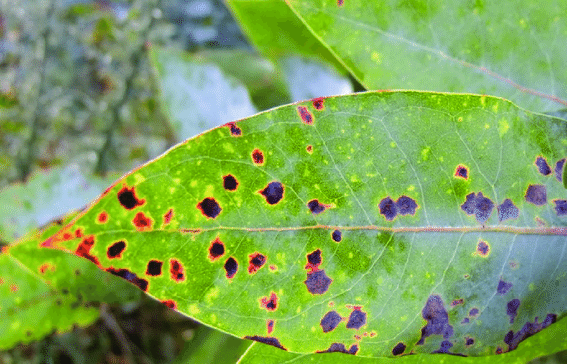
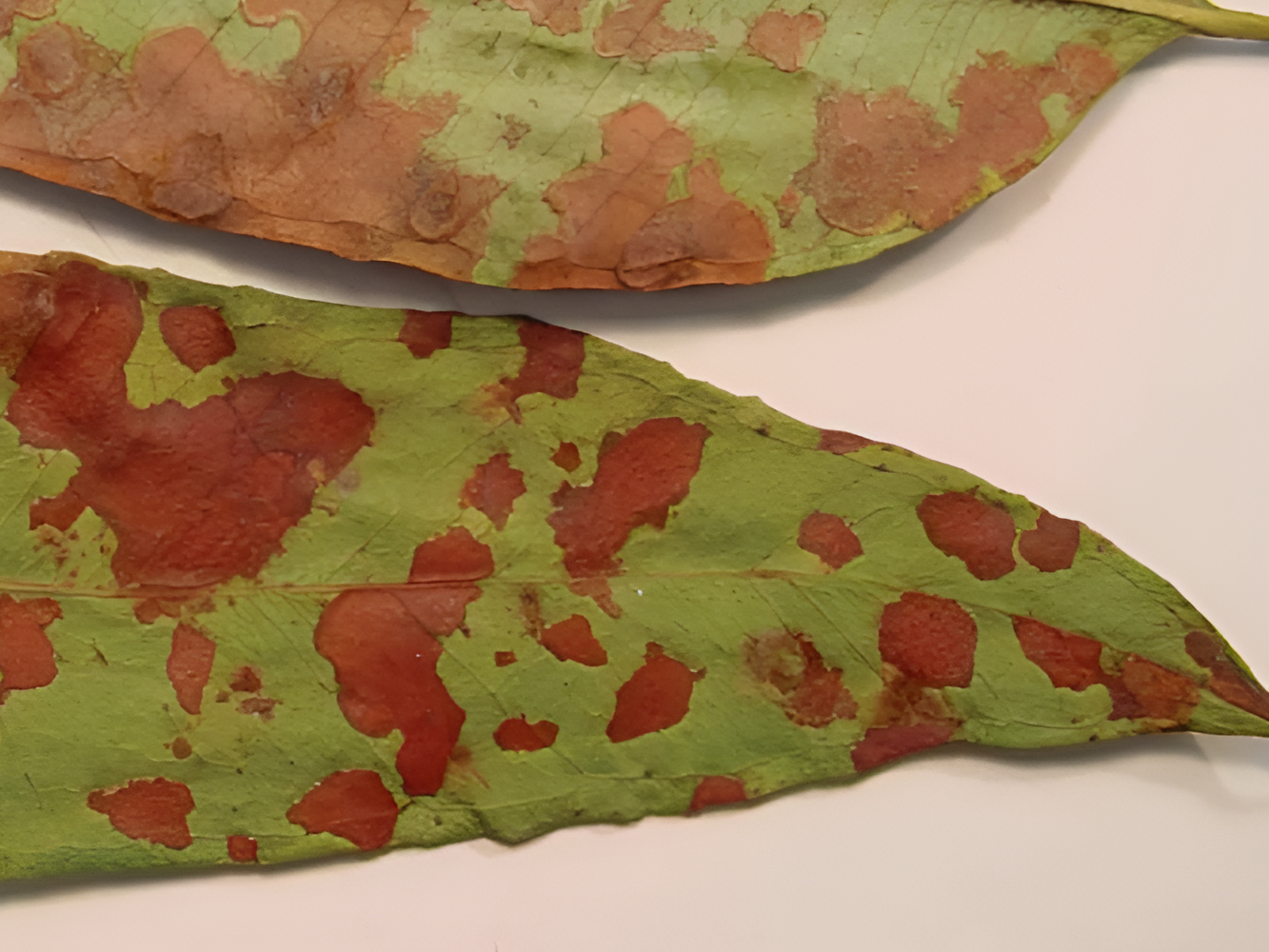
Marksii Leaf Spot
Leaf with severe case of Marksii Leaf Spot

Symptoms:

M. marksii (Marksii leaf spot) outbreaks will nominally appear as circular or irregular shaped spots that expand from 3-20mm in width and take on a yellow or red-brown colour when on the upper leaf surface (sky orientated) and a grey tone on the lower surface (ground orientated). However, this can vary depending on the particular species of eucalypt that is infected.

E. pilularis (Blackbutt) eucalypts infected by M. marksii often show reddish-brown lesions with irregular circle patterns that clump together and coalesce. Meanwhile, other species like E. saligna (Sydney blue gum), E. dunnii (Dunn’s white gum) and E. grandis (Rose gum) infected with M. marksii manifest yellowish-brown coloured spots that have reddish-brown borders and take on a mostly circular appearance of about 12mm in size.

In any case, the disease tends to usually form around the margin or edges of a leaf where they usually combine together to form larger spots. M. marksii generally targets the older leaves in a tree first, especially those in the lower canopy where there is more shade from the sun. As a result, the leaves infected by this fungi are prone to pre-mature dropping which causes a noticeable decline in the fullness of the lower canopy.

Causes:

The fruiting bodies of M. marksii are usually found on the lower leaf surface away from the sun but can sometimes, albeit rarely, form on the upper surface of the infected leaf as well. These fruiting bodies will normally only release spores when humidity is both extremely high (>85%) and the leaf is sufficiently wet.

M. marksii spores are usually carried off by rain to infect fresh leaf tissue nearby or uninfected leaves. Infected tissue can also transmit the disease after being shed prematurely as, much like the Aulographina eucalypti (Target leaf spot) fungi, the lightly infected tissue and lesions caused by M. marksii are capable of surviving for extremely long amounts of time off structure and thus serve as viable paths of transmission for the fungi to spread further.
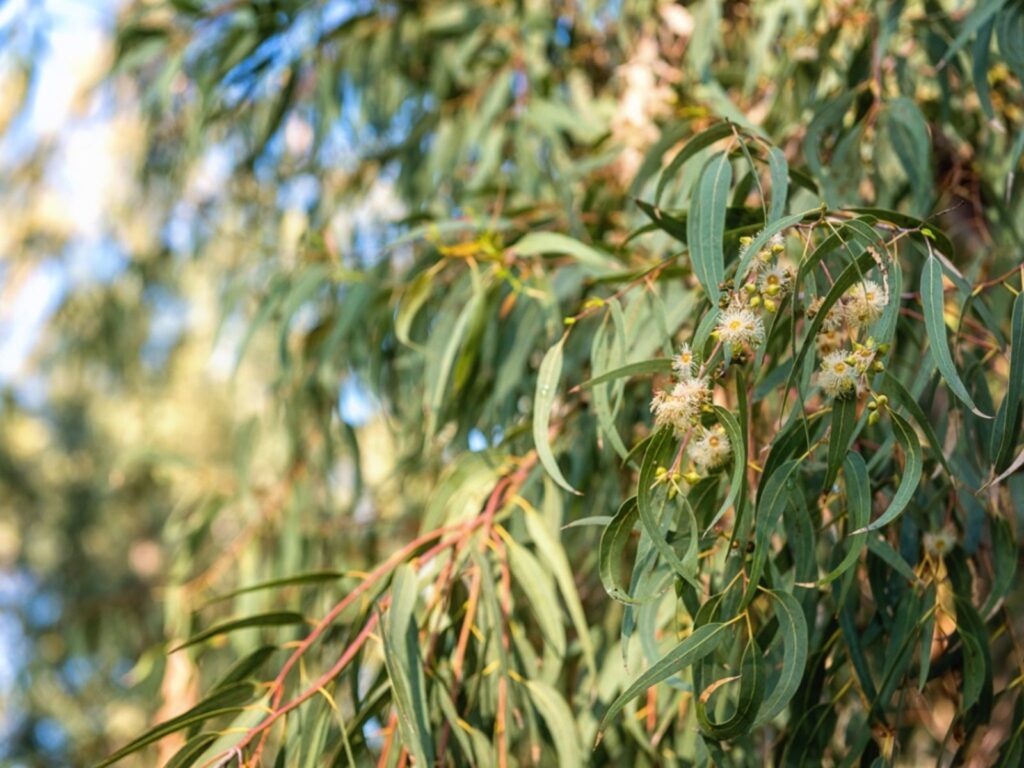
Eucalyptus leaves
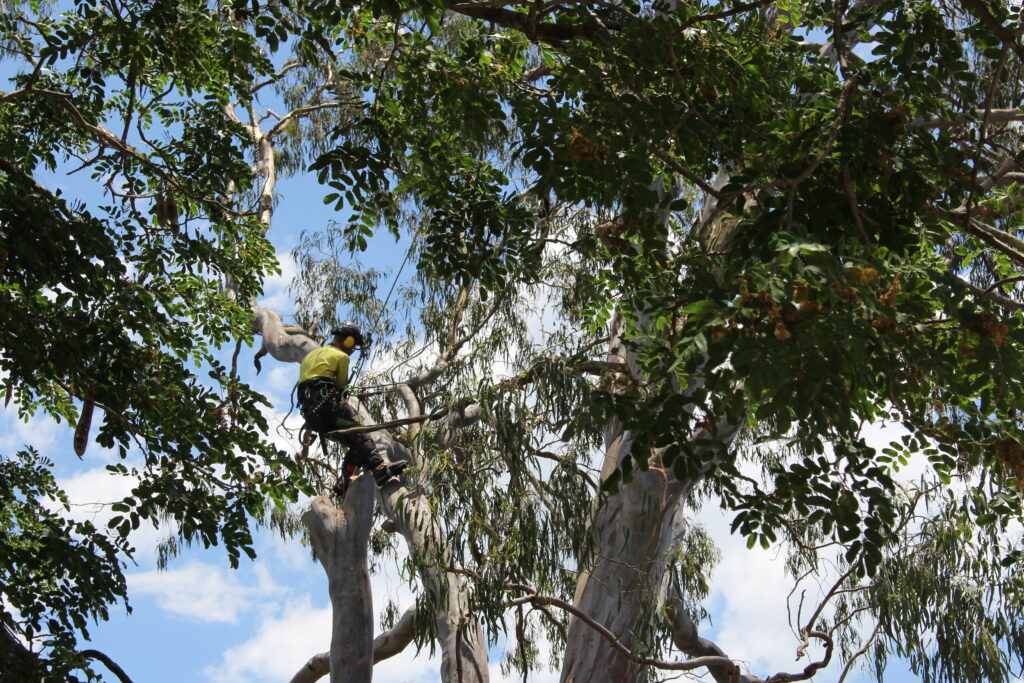
Skilled climber and arborist preparing for pruning work on a gum tree.

Management & Treatment:

While M. marksii is a very real and serious problem for eucalypt tree plantations overseas, it is not a major threat nor concern in Australia and is generally left alone when isolated outbreaks occur. While the disease does cause mild reductions in the fullness of the affected trees canopy, well established trees are normally more then capable of recovering once the disease passes without intervention.

While intervention isn’t usually necessary once infected, preventative measures can be taken to reduce the likelihood of the disease occurring in the first place, as well as returning in the future. Leaf droppings should be cleared out of the garden and disposed of in a waste bin, regardless of whether a disease is present, as layers of decaying leaves provide ideal breeding grounds for other fungi as well.

If you believe you might need help with managing your trees on your property, contact us here or call us on 1800 353 053.

Further Resources & Research:

Leaf spot diseases. (2024, March 8). Queensland Government. Retrieved July 15, 2025, from https://www.business.qld.gov.au/industries/farms-fishing-forestry/forests-wood/pests-diseases/trees-timber/leaf-spot-disease

Carnegie, AJ, Lawson, SA, Smith, TE, Pegg, GS, Stone, C, McDonald, JM, 2008, Healthy hardwoods: a field guide to pests, diseases and nutritional disorders in subtropical hardwoods, Forest & Wood Products Australia, Victoria.

Van Niekerk, J.M. et al. (2004) ‘Systematic reappraisal of Coniella and Pilidiella, with specific reference to species occurring on Eucalyptus and Vitis in South Africa’, Mycological Research, 108(3), pp. 283–303. doi:10.1017/S0953756204009268.

Contact us
Heritage Consultancy
  • 1800 353 053
    (07) 3715 5444
Brisbane
  • 25 Spine Street
    Sumner Q 4074
Toowoomba
  • Wilkinson St
    Harlaxton Q 4350
Gold Coast
  • Barnett Place, Molendinar, Q 4214
Redlands
  • Mt Cotton Rd
    Burbank Q 4156
  • Facebook
  • YouTube
  • Instagram
Certification
Registered with OnlineInduction.com
Capability Statement

Copyright © 2026 · Capability Statement · Policies

Get A Quote – Consultancy

Name(Required)
Address(Required)
I am interested in…(Required)
Provide us with additional information regarding your inquiry here. Otherwise you can leave blank.

Supporting Successful Projects Before Construction Begins.

The most effective arboricultural outcomes are achieved during the earliest stages of project planning. By identifying opportunities and constraints before detailed design, Heritage Consultancy assists clients in reducing project risk, minimising redesigns, avoiding construction variations and achieving efficient planning approvals.

Our consultants work closely with developers, architects, planners and engineers to integrate arboriculture into the design process, delivering practical solutions that balance project objectives with environmental and legislative requirements.

Core Services

Arboricultural Impact Assessments (AIA)

Tree Constraints Analysis (TCA)

Development Application Support

Tree Retention & Removal Assessments

Vegetation Management Plans (VMP)

Tree Protection Plan (TPP)

Arboricultural Specifications

Concept & Detailed Design Reviews

Council Liaison & Regulatory Advice

Environmental Due Dilligence

Explore Planning Services Here!

24 Month Plan – Included Services

Treatment of Pre-Existing Stressors.

Treatment of pre-existing environmental stressors present in or around the site.

Plant Tissue Testing.

Performed once every two (2) months. Undertaken to determine what kind of nutrients a plant is absorbing from the ground.

Read more…

Soil Testing.

Performed once every two (2) months. Testing conducted to identify problems or deficiencies with the soil.

Read more…

Soil Microbial Assessments.

Performed once a month. Used to determine the fertility and microbial activity present within the soil, including the presence of diseases and fungi.

Read more…

Comprehensive Agronomist Reports & Consultations.

You may request a full, comprehensive agronomist report at any time, to help you better understand the impact our services make.

Read more…

Nutritional Treatment Plan.

Regular and periodic application of nutritional boosters for soil, lawn and gardens to ensure an even balance of nutrients year-round.

Read more…

Weed, Pest & Disease Prevention.

Performed periodically – we apply weed, pest and disease preventative sprays designed to prevent the encroachment of unwanted and unsightly guests.

Read more…

12 Month Plan – Included Services

Treatment of Pre-Existing Stressors.

Treatment of pre-existing environmental stressors present in or around the site.

Plant Tissue Testing.

Performed once every two (2) months. Undertaken to determine what kind of nutrients a plant is absorbing from the ground.

Read more…

Soil Testing.

Performed once every two (2) months. Testing conducted to identify problems or deficiencies with the soil.

Read more…

Soil Microbial Assessments.

Performed once a month. Used to determine the fertility and microbial activity present within the soil, including the presence of diseases and fungi.

Read more…

Comprehensive Agronomist Reports & Consultations.

You may request a full, comprehensive agronomist report at any time, to help you better understand the impact our services make.

Read more…

Nutritional Treatment Plan.

Regular and periodic application of nutritional boosters for soil, lawn and gardens to ensure an even balance of nutrients year-round.

Read more…

Weed, Pest & Disease Prevention.

Performed periodically – we apply weed, pest and disease preventative sprays designed to prevent the encroachment of unwanted and unsightly guests.

Read more…

6 Month Plan – Included Services

Treatment of Pre-Existing Stressors.

Treatment of pre-existing environmental stressors present in or around the site.

Plant Tissue Testing.

Performed once every two (2) months. Undertaken to determine what kind of nutrients a plant is absorbing from the ground.

Read more…

Soil Testing.

Performed once every two (2) months. Testing conducted to identify problems or deficiencies with the soil.

Read more…

Soil Microbial Assessments.

Performed once a month. Used to determine the fertility and microbial activity present within the soil, including the presence of diseases and fungi.

Read more…

Get a quote

Name(Required)
I am interested in(Required)