

• Skip to main content
  • Skip to header right navigation
  • Skip to site footer
1800 353 053
  • Facebook
  • YouTube
  • Instagram
  • LinkedIn
Heritage Tree Consultancy

Heritage Tree Consultancy

  • About
  • Explore VOGT
    • Geo Injector Mini
    • Geo Injector Maxi
    • Geo Injector Pro
  • Services
    • Asset & Risk Management
    • Tree Science & Diagnostics
    • Construction & Compliance
    • Planning & Development
    • Soil & Plant Health
  • Insights
  • Contact Us
    • Locations
      • Brisbane
      • Gold Coast
      • Redlands
      • Toowoomba
  • Get a quote

Identifying Diseases: Phytophthora Dieback

Phytophthora cinnamomi (Phytophthora Dieback) is a type of root rot that affects a wide range of economic crops such as avocado and pineapple, alongside wild plants and is an extreme threat across much of western and southern Australia. P. cinnamomi is an incredibly destructive fungal pathogen that, if not handled swiftly and carefully, can wipe out entire orchards of avocados, pineapples and also devastate entire ecosystems in native bushland. It is also known to attack other plants and trees such as:

  • Macadamia integrifolia (Macadamia)
  • Prunus spp. (Stone Fruits)
  • A range of wild plants from the Genera Banksia, Darwinia, Grevillea, Leucopogon, Verticordia and Xanthorrhoea.

P. cinnamomi is a very serious problem throughout south-east Western Australia but is also a threat to plant species throughout Victoria, Tasmania and South Australia. Only the Northern Territory is considered safe from the disease as the conditions are extremely unfavorable for it to be any serious threat.

Symptoms

P. cinnamomi is a very serious problem throughout south-east Western Australia but is also a threat to plant species throughout Victoria, Tasmania and South Australia. Only the Northern Territory is considered safe from the disease as the conditions are extremely unfavorable for it to be any serious threat.

Symptoms of P. cinnamomi can sometimes take some time to show after a host plant has been initially infected. Above the soil, the affected plant will begin to see signs of dieback, wilting, reduced fruit production and yield (if the plant produces fruit), stem cankers, leaf curling and chlorosis, gum exudation and also leaves the host open to other secondary diseases such as collar rot.

Once symptoms begin to appear, the tree will show a noticeable decline in all areas of its health. Leaves will appear a less full, pale green and will drop pre-maturely for no obvious reason. Shoots will gradually begin to die back to the point where the tree becomes a skeletonized husk of dying branches.

Below the soil the symptoms become very clear, very quickly. Even early on in the infection, infected roots will show clear signs of root rot as the pathogen spreads and the tissue of the roots themselves become completely incapable of absorbing nutrients for the host.
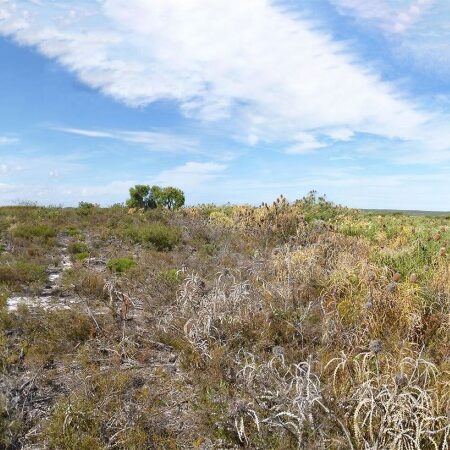
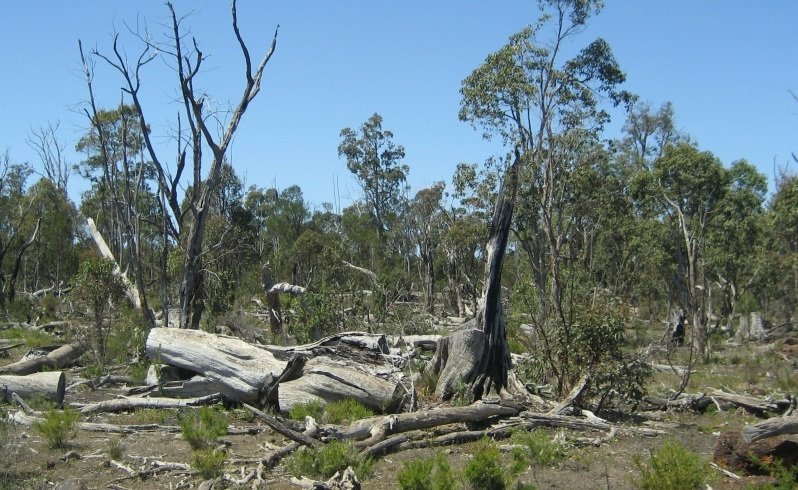
Dieback in outback forest

Causes

P. cinnamomi is capable of spreading through soil, infected plant material (leaves, stems, branches, etc.) and water. During periods of harsh environmental conditions the disease can enter a dormancy phase in which the disease turns into chlamydospores and can survive in stasis for extremely long periods of time.

Once environmental conditions become favorable again, the dormant chlamydospores begin to germinate and release zoospores which infect a host plant through the root tips. As zoospores require water to move, infection is most likely in extremely wet soils, such as those that are heavily compacted and frequently flood due to poor drainage.

Once the disease infects the roots of a host, it spreads along the length of the root, absorbing carbohydrates and nutrients within the root and destroying the root tissue causing it to rot.

Management

Preventing the problem from occurring in the first place is often the best strategy. We’ve included some more specific details regarding specific methods that should be utilised in tackling this particular disease.

Preventing the rot in the first place is the best practice and can be done by utilizing an integrated management strategy involving biological and cultural control methods alongside appropriate usage of fungicides. Trees should be planted in soil that is easily drained (allowing water to feed directly in to the underground water table without issue) as well as having a healthy layer of mulch and organic material within the soil that can shield the spread of the pathogen.

Once P. cinnamomi infects a tree or plant there is little there is no known way to cure it. The best course of action is to contain and destroy the tree alongside all roots, plant material and soil to ensure that any diseased tissues and soil is eliminated for future plantings.
Further Reading

Queensland Government [Business Queensland]. (2023, July 12). Brown root rot. Business Queensland. Retrieved July 15, 2025, from https://www.business.qld.gov.au/industries/farms-fishing-forestry/forests-wood/pests-diseases/trees-timber/brown-root-rot

Queensland Government [Business Queensland]. (2022, October 19). Phytophthora root rot. Business Queensland. Retrieved July 15, 2025, from https://www.business.qld.gov.au/industries/farms-fishing-forestry/agriculture/biosecurity/plants/diseases/horticultural/phytophthora-root-rot

Contact us
Heritage Consultancy
  • 1800 353 053
    (07) 3715 5444
Brisbane
  • 25 Spine Street
    Sumner Q 4074
Toowoomba
  • Wilkinson St
    Harlaxton Q 4350
Gold Coast
  • Barnett Place, Molendinar, Q 4214
Redlands
  • Mt Cotton Rd
    Burbank Q 4156
  • Facebook
  • YouTube
  • Instagram
Certification
Registered with OnlineInduction.com
Capability Statement

Copyright © 2026 · Capability Statement · Policies

Get A Quote – Consultancy

Name(Required)
Address(Required)
I am interested in…(Required)
Provide us with additional information regarding your inquiry here. Otherwise you can leave blank.

Supporting Successful Projects Before Construction Begins.

The most effective arboricultural outcomes are achieved during the earliest stages of project planning. By identifying opportunities and constraints before detailed design, Heritage Consultancy assists clients in reducing project risk, minimising redesigns, avoiding construction variations and achieving efficient planning approvals.

Our consultants work closely with developers, architects, planners and engineers to integrate arboriculture into the design process, delivering practical solutions that balance project objectives with environmental and legislative requirements.

Core Services

Arboricultural Impact Assessments (AIA)

Tree Constraints Analysis (TCA)

Development Application Support

Tree Retention & Removal Assessments

Vegetation Management Plans (VMP)

Tree Protection Plan (TPP)

Arboricultural Specifications

Concept & Detailed Design Reviews

Council Liaison & Regulatory Advice

Environmental Due Dilligence

Explore Planning Services Here!

24 Month Plan – Included Services

Treatment of Pre-Existing Stressors.

Treatment of pre-existing environmental stressors present in or around the site.

Plant Tissue Testing.

Performed once every two (2) months. Undertaken to determine what kind of nutrients a plant is absorbing from the ground.

Read more…

Soil Testing.

Performed once every two (2) months. Testing conducted to identify problems or deficiencies with the soil.

Read more…

Soil Microbial Assessments.

Performed once a month. Used to determine the fertility and microbial activity present within the soil, including the presence of diseases and fungi.

Read more…

Comprehensive Agronomist Reports & Consultations.

You may request a full, comprehensive agronomist report at any time, to help you better understand the impact our services make.

Read more…

Nutritional Treatment Plan.

Regular and periodic application of nutritional boosters for soil, lawn and gardens to ensure an even balance of nutrients year-round.

Read more…

Weed, Pest & Disease Prevention.

Performed periodically – we apply weed, pest and disease preventative sprays designed to prevent the encroachment of unwanted and unsightly guests.

Read more…

12 Month Plan – Included Services

Treatment of Pre-Existing Stressors.

Treatment of pre-existing environmental stressors present in or around the site.

Plant Tissue Testing.

Performed once every two (2) months. Undertaken to determine what kind of nutrients a plant is absorbing from the ground.

Read more…

Soil Testing.

Performed once every two (2) months. Testing conducted to identify problems or deficiencies with the soil.

Read more…

Soil Microbial Assessments.

Performed once a month. Used to determine the fertility and microbial activity present within the soil, including the presence of diseases and fungi.

Read more…

Comprehensive Agronomist Reports & Consultations.

You may request a full, comprehensive agronomist report at any time, to help you better understand the impact our services make.

Read more…

Nutritional Treatment Plan.

Regular and periodic application of nutritional boosters for soil, lawn and gardens to ensure an even balance of nutrients year-round.

Read more…

Weed, Pest & Disease Prevention.

Performed periodically – we apply weed, pest and disease preventative sprays designed to prevent the encroachment of unwanted and unsightly guests.

Read more…

6 Month Plan – Included Services

Treatment of Pre-Existing Stressors.

Treatment of pre-existing environmental stressors present in or around the site.

Plant Tissue Testing.

Performed once every two (2) months. Undertaken to determine what kind of nutrients a plant is absorbing from the ground.

Read more…

Soil Testing.

Performed once every two (2) months. Testing conducted to identify problems or deficiencies with the soil.

Read more…

Soil Microbial Assessments.

Performed once a month. Used to determine the fertility and microbial activity present within the soil, including the presence of diseases and fungi.

Read more…

Get a quote

Name(Required)
I am interested in(Required)