
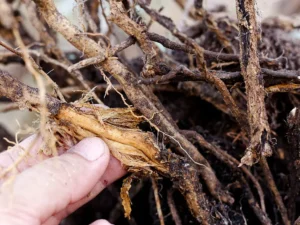
Phellinus noxious (Brown Root Rot) is a pathogenic tree fungus most commonly found within the rainforests across Queensland and Northern New South Wales. This fungus strangles and steals water and nutrients from the roots of trees, starving them of resources, leading to decay and eventually the total death of the tree itself. The pathogen is becoming a more frequent problem within urban and amenity gardens and poses a serious risk of partial or total tree failure where risk mitigation is an integral part of tree management and care.
Affected Trees
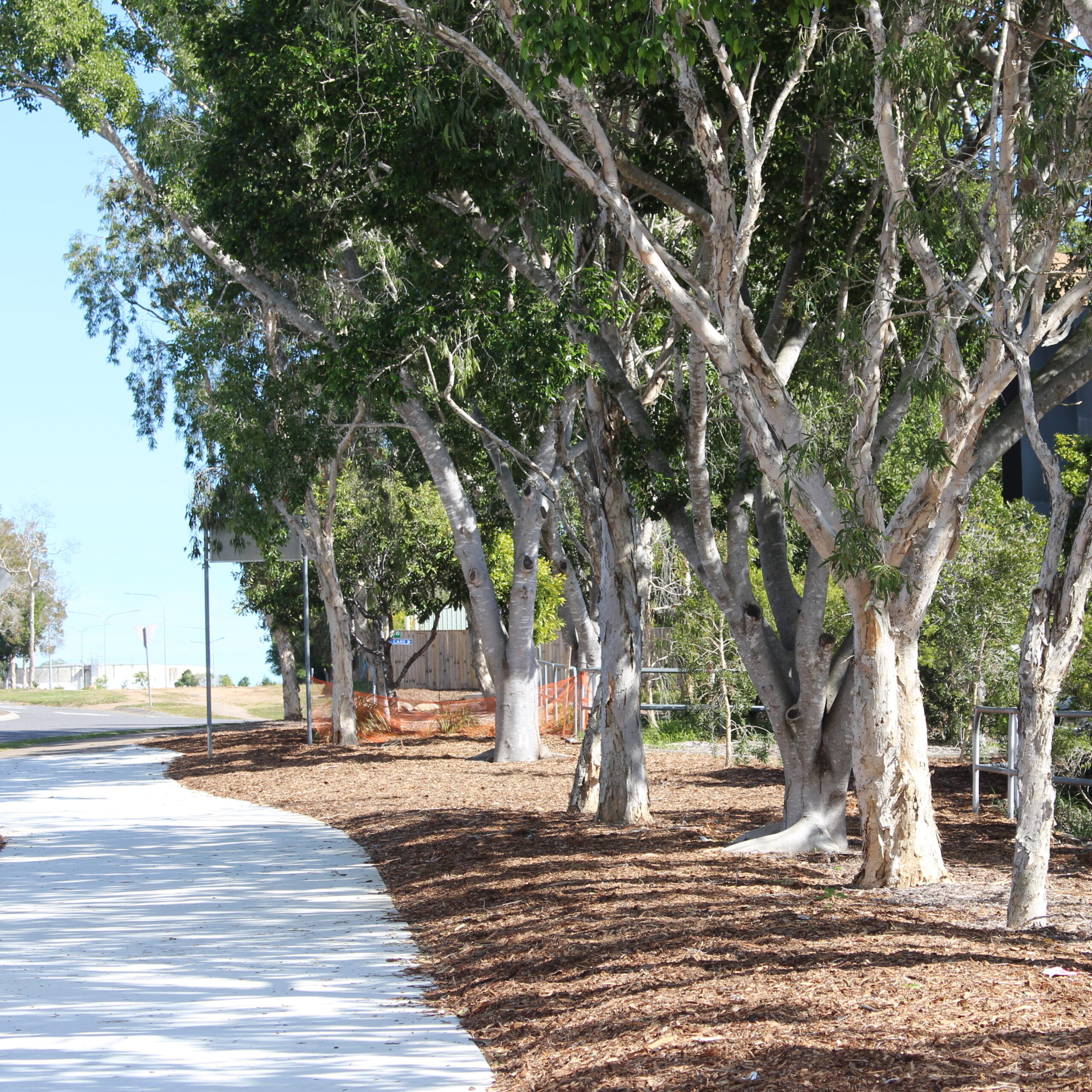
P. noxious is known to affect a massive range of over 200 different species from 100 different genera of both native and imported trees across the east coast of Australia, with the most serious cases of the disease usually being reported across Queensland and northern New South Wales. A shortened list of affected trees include:
- Palms (Arecaceae spp.)
- Figs (Ficus spp.)
- Hoop Pine (Araucaria cunninghamii)
- Eucalypts (Eucalyptus spp.)
- Leopard Tree (Libidibia ferrea)
- Poinciana (Delonix regia)
- Spotted Gums (Corymbia spp.)
- Carribean Pine (Pinus caribaea var. hondurensis)
- Queensland Maple (Flindersia brayleyana)
- Silky Oak (Grevillea robusta)
- And more…
Symptoms
P. noxious can often be quite difficult to identify, even after the tree has begun to show serious signs of decline and can often be mistaken for symptoms of various pest infestations. Because P. noxious affects such a massive range of trees, the symptoms can sometimes vary wildly from species-to-species.
Regardless, there a few telltale signs that point to the presence of P. noxious within a host tree, such as:
- The most noticeable sign is a ‘stocking’ or layer of black fungus with a white margin forming around the entire trunk or exposed roots of the host tree while the disease is actively growing. This ‘stocking’ will eventually turn a cinnamon-brown colour as it reaches maturity, which is a fairly good indication of how bad the infection might be. However, not every tree infected will display these symptoms, so an excavation and visual inspection of the roots may be required to determine whether the tree is infected.
- Heavy periods of rain will often cause fruiting bodies to develop across the surface of the infected bark and will often be flush with its surface. These fruiting bodies are hard and have a woody or leathery texture and appearance.
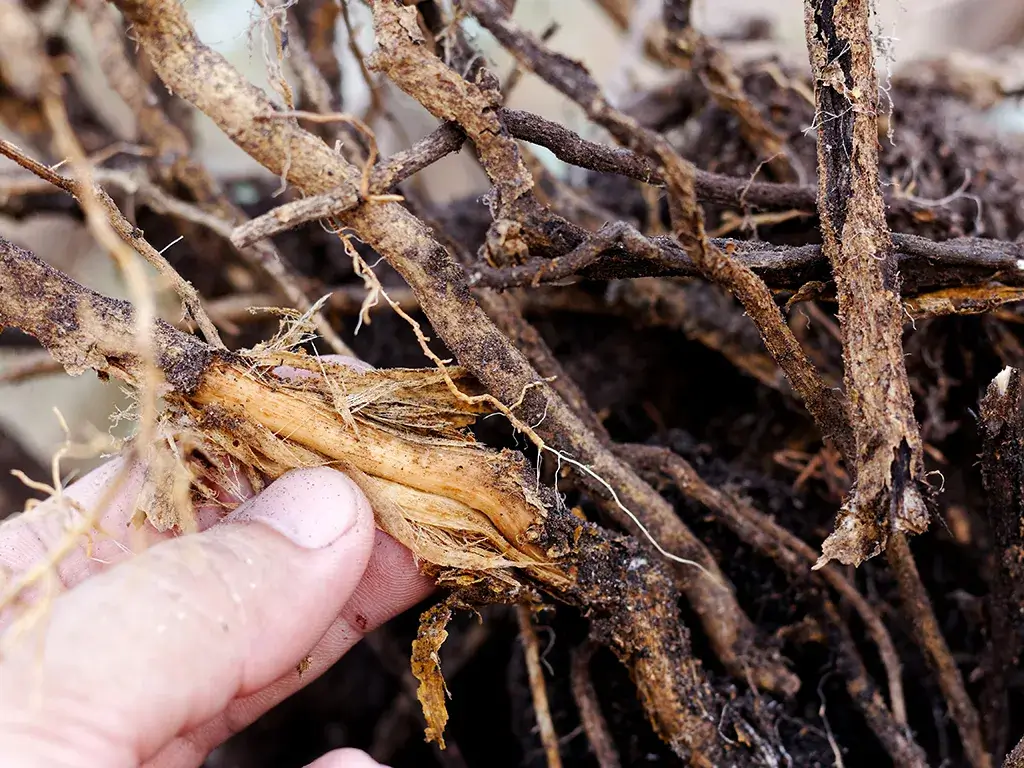
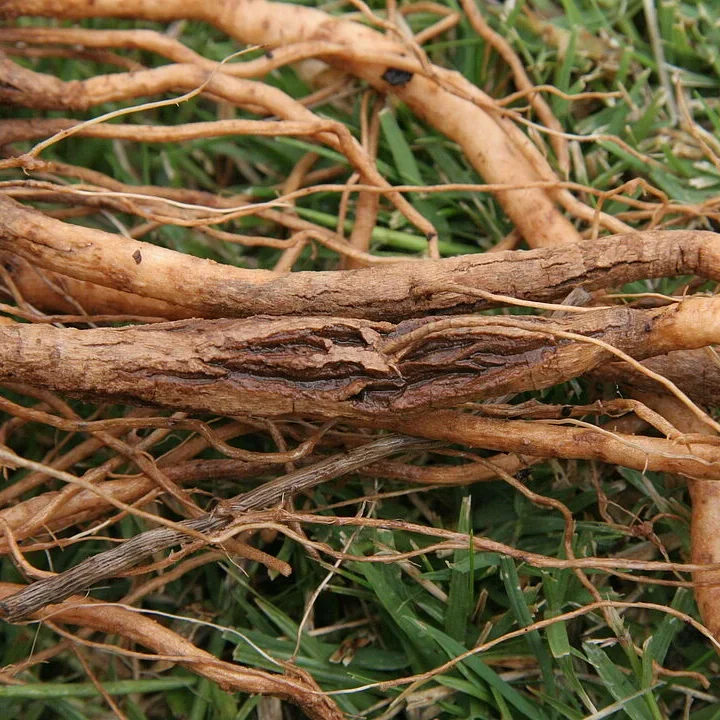
- Roots of host trees infected with P. noxious will have a noticeable discoloration, often appearing brown at first before turning white in colour while also becoming soft and stringy.
Younger trees will often see a state of rapid wilting in the structure of the tree followed by sudden and violent decline of health and death. In contrast, older established trees will have their leaves and canopies gradually turn a sickly pale yellow or white colour, alongside a reduction in the thickness of the crown and eventually death.
In all cases, the timeline of symptoms and death can vary wildly and may take anywhere between a couple of months to several years for the infection to kill its host.
Causes
P. noxious spreads through root-to-root contact but is also capable of spreading via airborne spores released by the fruiting bodies that sometimes grow on the trunk of the tree. These spores are spread through the wind and rain, settling in the nearby soil where they may infect fresh hosts.
Furthermore, infected root tissue can survive for decades in the soil or the stump of a dead host if not removed, which is why extensive sterilization efforts to eliminate the disease need to be undertaken, or else fresh plantings will likely rapidly die off shortly after being planted.
Due to the primary method of transmission being through underground contact of root networks, P. noxious is exceptionally difficult to control and becomes extremely invasive once infections get a foothold
Management
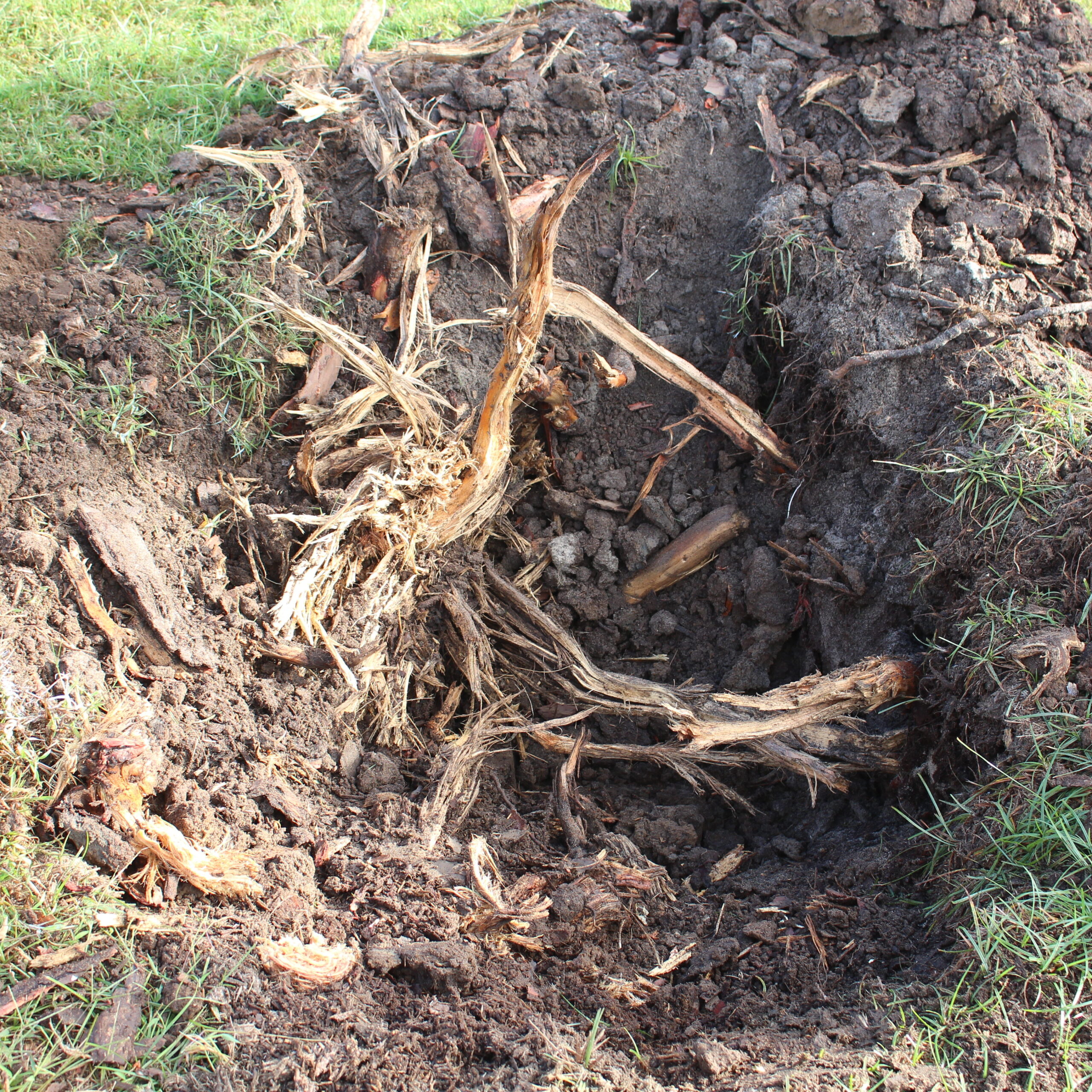
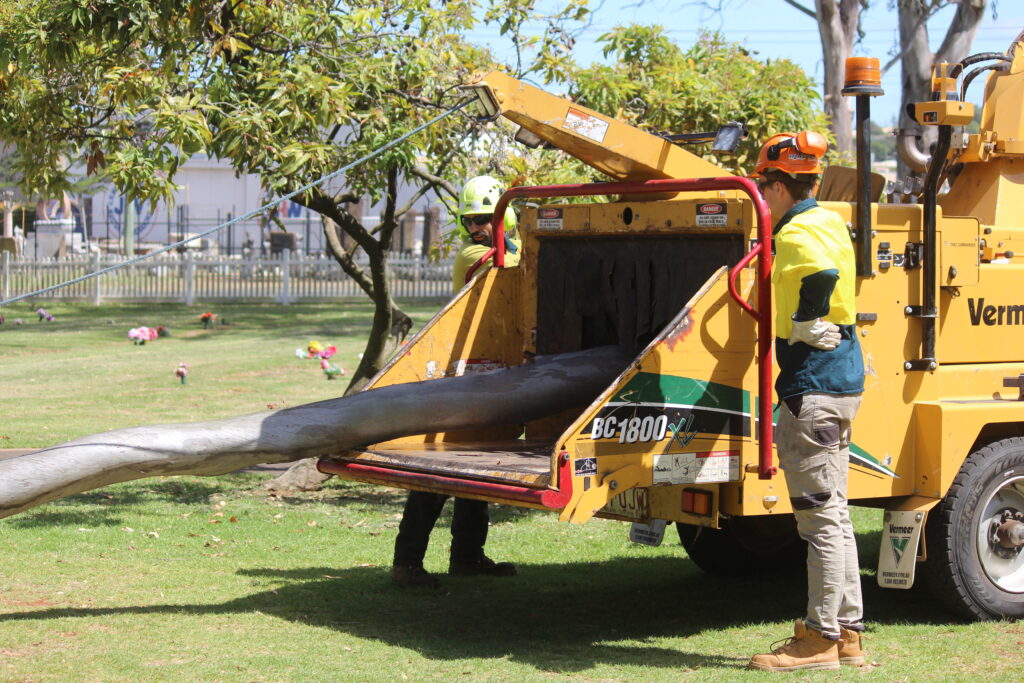
Like all other forms of root rot, P. noxious cannot be treated in the later stages of infection. Removal of the infected tree(s) following by the thorough destruction of all of the roots is necessary to prevent any future plantings from becoming infected by left over infected tissue within the soil.
The soil around the infected tree needs to be excavated in its entirety and should be composted for 16 weeks or more, being turned over regularly while also ensuring the piles reach at least 75 degrees Celsius to ensure the elimination of any left over pathogenic spores. Once the mulch has spent the appropriate amount of time composting, it should be sieved to remove any material >18mm before being used.
While some chemical control agents exist that slow or halt the fungus, it is not a viable control method for long-term management of trees within urban environments.
References
Queensland Government [Business Queensland]. (2023, July 12). Brown root rot. Business Queensland. Retrieved July 15, 2025, from https://www.business.qld.gov.au/industries/farms-fishing-forestry/forests-wood/pests-diseases/trees-timber/brown-root-rot
Queensland Government [Business Queensland]. (2022, October 19). Phytophthora root rot. Business Queensland. Retrieved July 15, 2025, from https://www.business.qld.gov.au/industries/farms-fishing-forestry/agriculture/biosecurity/plants/diseases/horticultural/phytophthora-root-rot