

Identifying Diseases: Coniella Leaf Blight
As part of our comprehensive ‘Identifying Diseases’ series, this article will focus on Pilidiella eucalyptorum, more commonly known as Coniella leaf blight. P. eucalyptorum (Coniella leaf blight) targets a broad range of native trees, including Eucalypti spp. and is most often found throughout Queensland, northern New South Wales and South Australia:
Affected Trees:
P. eucalyptorum (Coniella leaf blight) targets a broad range of native trees, including Eucalypti spp. and is most often found throughout Queensland, northern New South Wales and South Australia:
- Large-fruited red mahogany (E. pellita)
- Dunn’s white gum (E. dunnii)
- Sydney blue gum (E. saligna)
- Rose gum (E. grandis)
- Southern blue gum (E. globulus)
Symptoms:
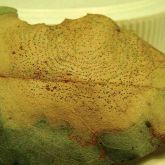
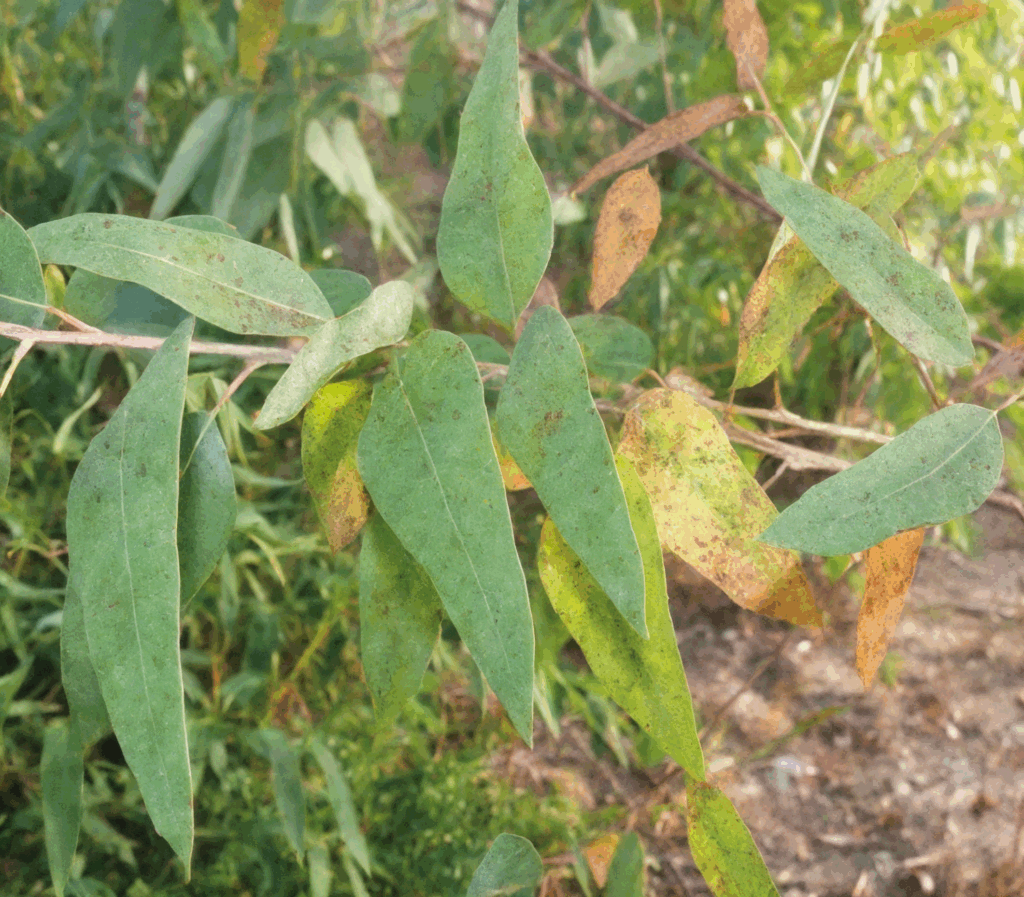
Taking on a large circular or irregular appearance (usually between 5-50mm in size), P. eucalyptorum (Coniella leaf blight) can appear as yellowish-brown, reddish-brown or greyish-black in colour and usually form along the edges of the infected leaf first before spreading to form larger blights.
The fungi often target older foliage or the coppice shoots (leaf stems) in the lower crown first, where there is less sunlight and therefore cooler. If left unchecked, this fungi can cover most, if not the entire surface, of a leaf and can also cause the formation of lesions on the stems and twigs of the leaves themselves which ultimately has a significant impact on the infected leaf’s ability to absorb sunlight used in the photosynthetic process.
As the fungi matures the infected leaves will often begin to curl and dry up, now unable to absorb a sufficient amount of sunlight for the photosynthetic process. The most heavily infected leaves will be pre-maturely shed which almost always leads to a significant reduction in the size and fullness of the lower canopy.
Causes:
P. eucalyptorum (Coniella leaf blight) most commonly follows a pathogenic attack, insect infestation or untreated physical damage that leaves the targeted tree in a weakened state. While it is unlikely, it is still possible that P. eucalyptorum can be the primary pathogen, especially so in extended periods of heavy rainfall or humidity. The diseases development is dramatically accelerated during humid conditions where the fungus thrives.
As the fungi matures it will sprout black fruiting bodies within concentric rings within the fungal spots and blights and almost exclusively occur on the upper leaf surface. The spores use rain splash to carry and spread itself further across the same leaf or onto other nearby leaves.
Management:
The pruning and removal of infected branches is the most effective way to reduce the spread of P. eucalyptorum from a tree and, if lucky, even outright remove it. Any clippings or green waste removed from the tree needs to be removed and burned or disposed of correctly. This includes every leaf and branch, as even one loose leaf can cause the disease to sprout up again in the future.
If you believe you might need help with managing your trees on your property, contact us here or call 1800 353 053.
Further Reading:
Thu, PQ, Griffiths, MW, Pegg, GS, McDonald, JM, Wylie, FR, King, J and Lawson, SA 2010, Healthy plantations: a field guide to pests and pathogens of Acacia, Eucalyptus and Pinus in Vietnam, Department of Employment, Economic Development and Innovation, Queensland, Australia.