

Identifying Diseases: Purple Leaf Spot.
As part of our comprehensive ‘Identifying Diseases’ series, this article will focus on Phaeothyriolum micothyrioides, more commonly known as Purple leaf spot. P. micothyrioides (Purple leaf spot) is another fungal disease that targets and attacks a variety of unique Corymbia and Eucalypt tree species found across Australia.
Affected Trees:
P. micothyrioides (Purple leaf spot) can be found throughout the entirety of mainland Australia and Tasmania. It targets a wide range of Eucalypt plant species, a majority of which belong to the Corymbia or Eucalyptus genus’.
- C. citriodora (Lemon-scented gum)
- C. henryi (Large-leaved spotted gum)
- Other Corymbia species.
- Rarely Euclayptus species.
Symptoms:
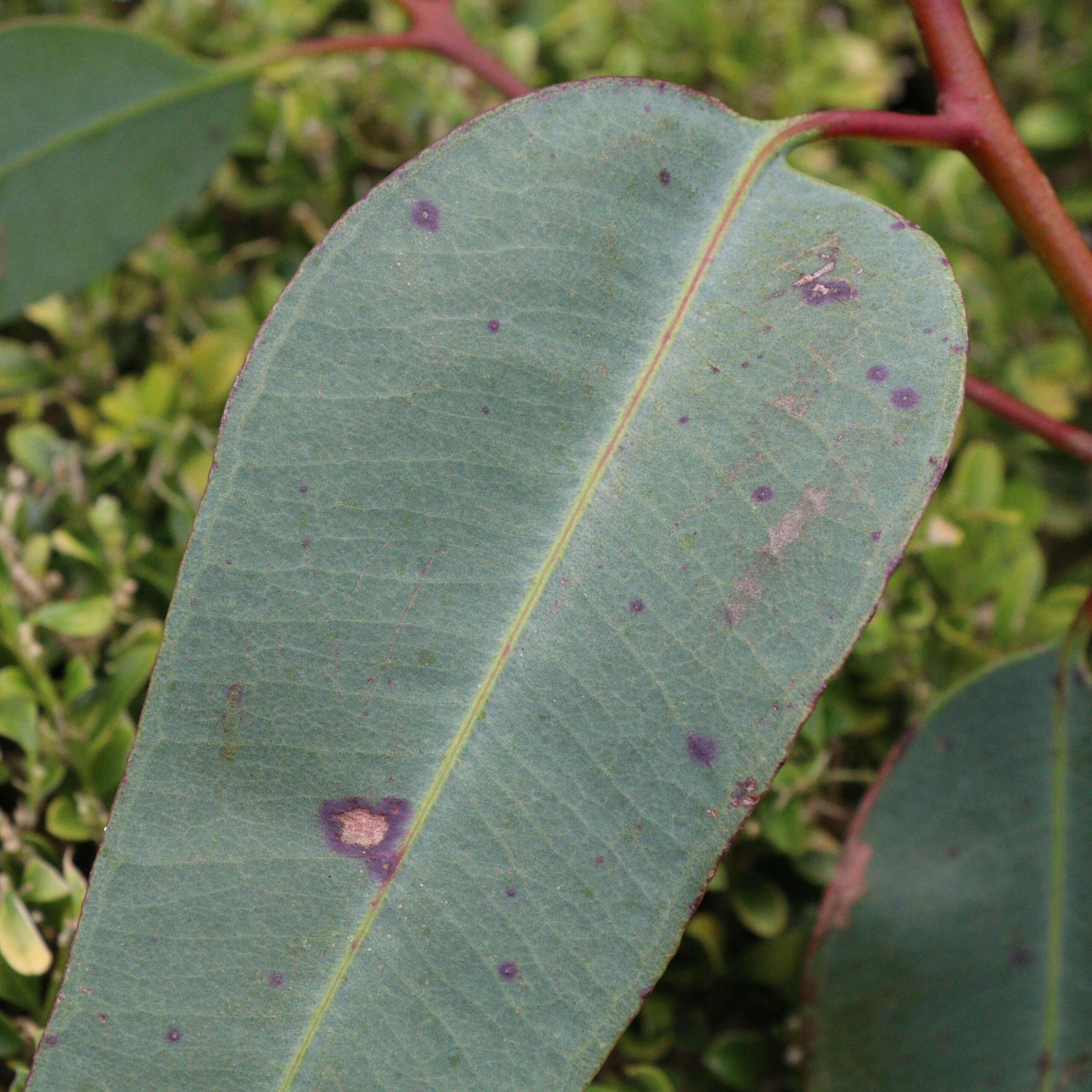
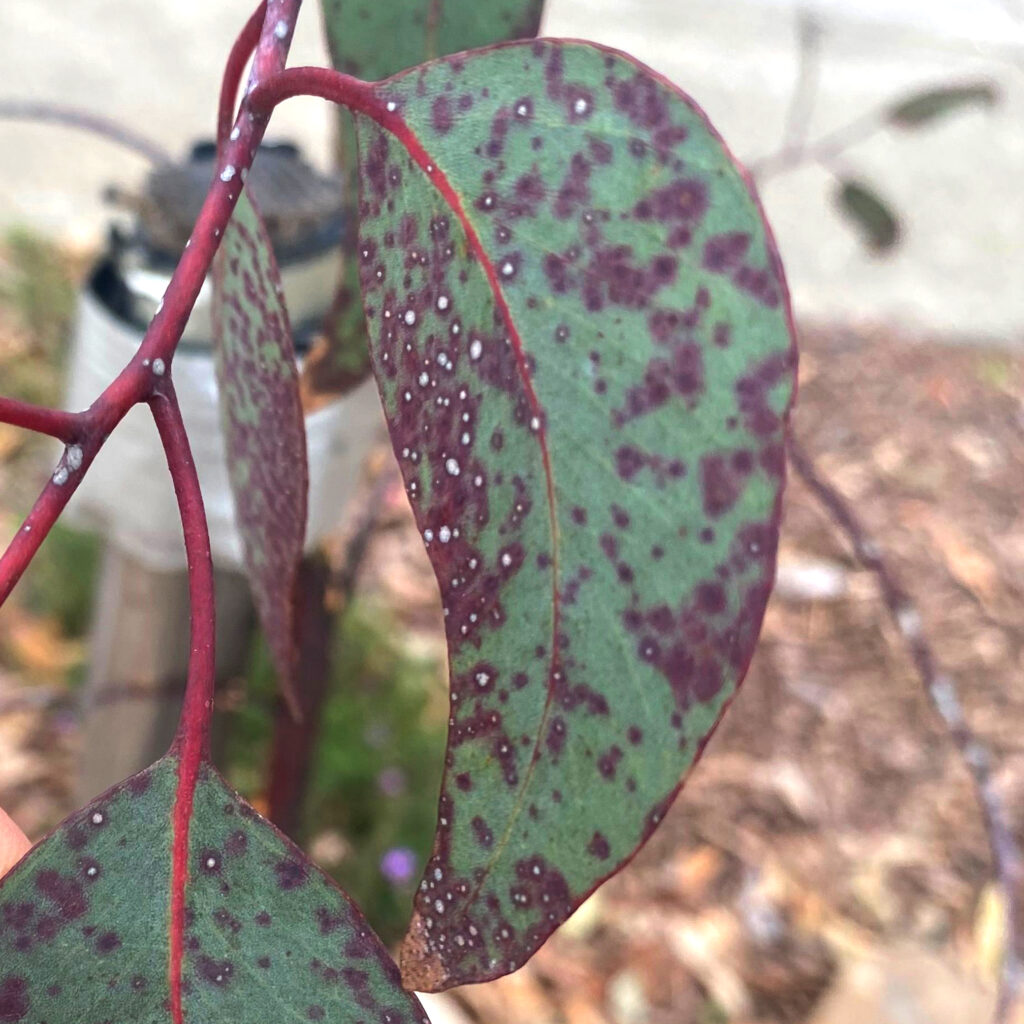
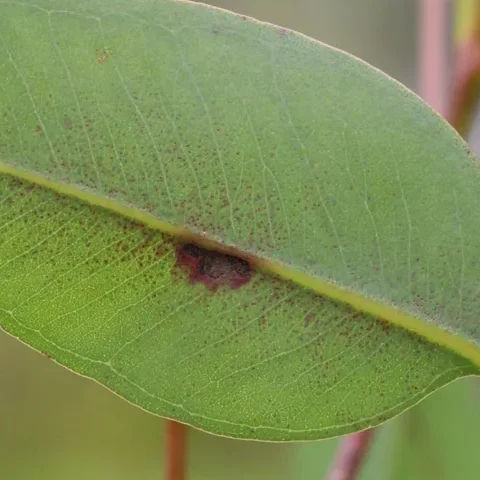
Appearing as circular spots with a chlorotic yellow colour, P. micothyrioides is usually found between 5-50mm in size, although in some instances it can grow larger. These yellow fungal spots eventually turn purple and then brown and grey as they age, although the colours may vary depending on the type of host eucalypt species.
While these spots can form on both the upper and lower surfaces of a leaf, they will rarely form on both sides of any one leaf. As the fungus matures they will eventually sprout black fruiting bodies that form within the spots, usually just before they turn purple in colour.
While the fungal spots may look unsightly and unhealthy, it’s mostly just a cosmetic problem. P. micothyrioides doesn’t normally cause leaves to drop pre-maturely which means that defoliation is an exceptionally rare occurrence.
Causes:
The fruiting bodies of P. micothyrioides (Purple leaf spot) will optimally discharge spores in the colder months of the year when the temperature settles between 5 and 10 degrees Celsius. The disease will also develop and mature faster during the colder months of the year, usually early autumn – late winter and is particularly prevalent in sub-tropical environments found near the coast.
The spores created from the fruiting bodies of the fungus will often be carried off by the wind to other non-infected leaves in close proximity which means that that heavily crowded clusters of trees are often the most at risk of infection.
Management & Treatment:
While P. micothyrioides (Purple leaf spot) causes damage to older and more mature leaves, even in situations of serious outbreak the disease can often be ignored and left to go throughout its life cycle with well established trees and plants. Since intervention isn’t usually necessary once the tree is infected, preventative measures can be taken to reduce the likelihood of the disease occurring in the first place or returning in the future. Leaf droppings should be cleared out of the garden and disposed of in a waste bin, regardless of whether a disease is present, as layers of decaying leaves provide ideal breeding grounds for other fungi as well.
If you believe you might need help with managing your trees on your property, contact us here or call 1800 353 053.
Further Resources & Research:
Carnegie, AJ, Lawson, SA, Smith, TE, Pegg, GS, Stone, C, McDonald, JM, 2008, Healthy hardwoods: a field guide to pests, diseases and nutritional disorders in subtropical hardwoods, Forest & Wood Products Australia, Victoria.